Ketchup for Canning (Better than Heinz)
This is a delicious Tomato Ketchup for Canning. It’s is healthier than Heinz because there’s no corn syrup and it’s made from garden fresh ingredients. I may be biased but I also think it tastes way better!

This is my first canning recipe, ever. I don’t make up recipes for canning in general because I don’t have a lab to test for safety. But this recipe of ketchup for canning is adapted from the Ball Complete Book of Home Preservation and the vegetable to acid ratio is the exact same- so I am positive it is safe! The only adjustments made were to dried spices and sugar.
The original went a little overboard on spices and this version is SO MUCH BETTER! Of all the recipes I’ve come up with over the years, I consider this one to be in the top 10.
It also has a super smooth finished product and a different method for getting the finished result. I hope you like it.
How to Make Ketchup for Canning
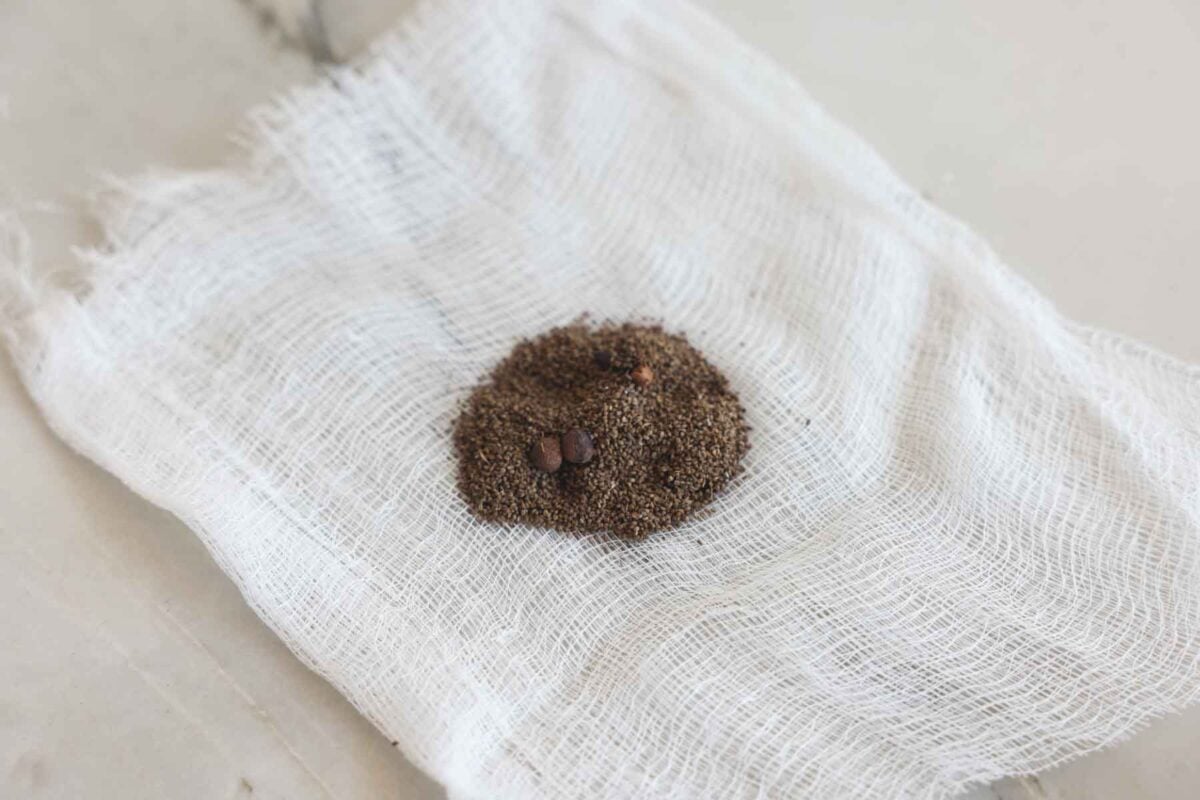
STEP 1: Turn oven to 425ºF. Then make a spice bag by taking cheesecloth and cutting out a square. Add celery seeds, cloves, and all spice on top of the cheese cloth, then tie in a knot or use twine to tie it together. (Some of the celery seeds may fall out, that’s ok!)

STEP 2: In a stainless steel saucepan, add the vinegar and the spice bag. Bring to a boil over high heat, then remove from heat and let it sit for a half hour with the spice bag in it. Then discard the spice bag.
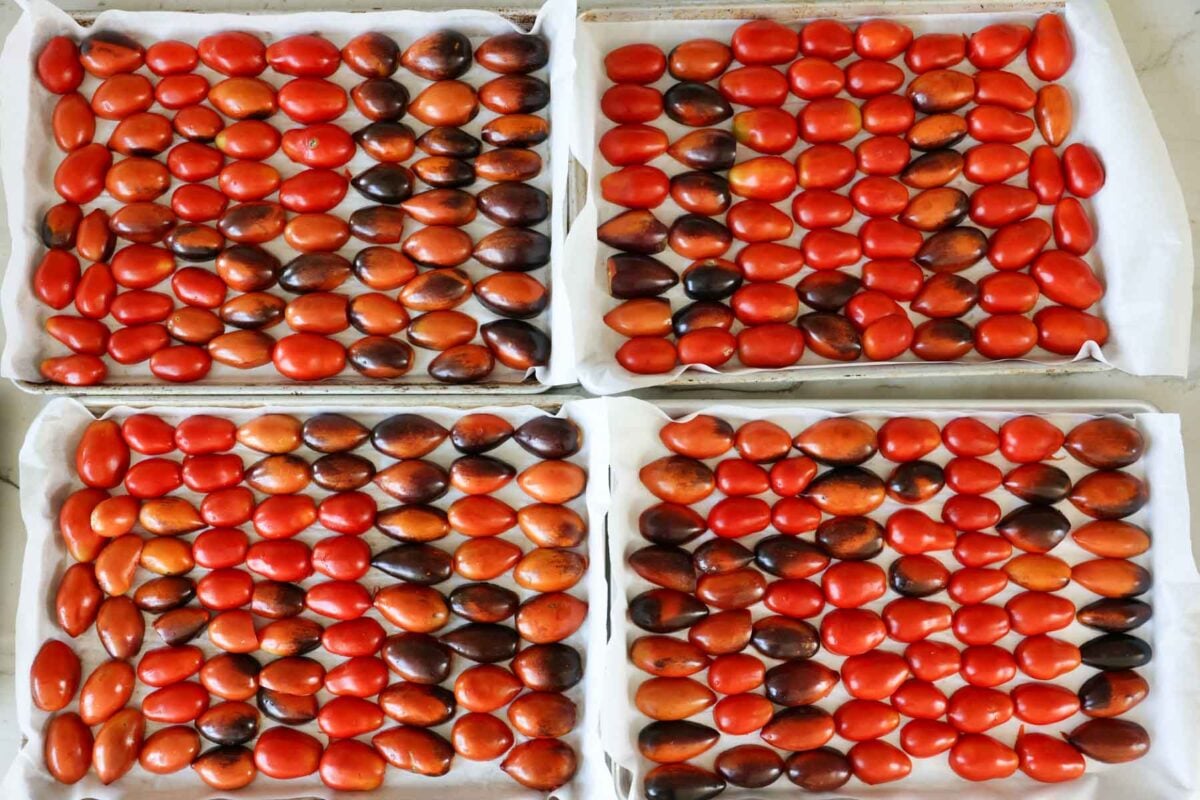
STEP 3: Meanwhile, cut tomatoes in half and core. (For Roma or San Marzano tomatoes, no need to core, just cut in half.) Place tomatoes cut side down, with one layer on baking trays and roast tomatoes for 1 hour at 425ºF.

STEP 4: While the tomatoes cook, sauté the onions for 5-10 minutes on medium low heat until soft and translucent

STEP 5: After the tomatoes finish, use a food mill or sauce maker to remove skins and seeds. *Include all the released tomato juices on the tray as well as roasted tomatoes to food mill ensure proper acidity. Discard the seeds and skins.

STEP 6: Place tomato sauce in a very large stainless steel saucepan. Add onions, sugar, salt, vinegar, cayenne pepper, black pepper, and dried garlic to the saucepan with the tomatoes. Bring to a boil, then reduce the heat and let it simmer, stirring frequently, until it becomes the desired thickness.

STEP 7: While reducing the liquid, prepare a water bath canner and half pint jars.

STEP 8: Working in small batches, transfer the mixture to the blender and puree until very smooth. Return all the pureed ketchup to the pot. Alternatively, you can keep the ketchup in the pot and use an immersion blender.

STEP 9: Ladle hot ketchup into half pint jars leaving a 1/2 inch of head space. Wipe rim. Center lid on the jar. Screw on the band with until it is finger tip-tight.

STEP 10: Place jars in canner and ensure the jars have at least one inch of water above the tops of the jars.

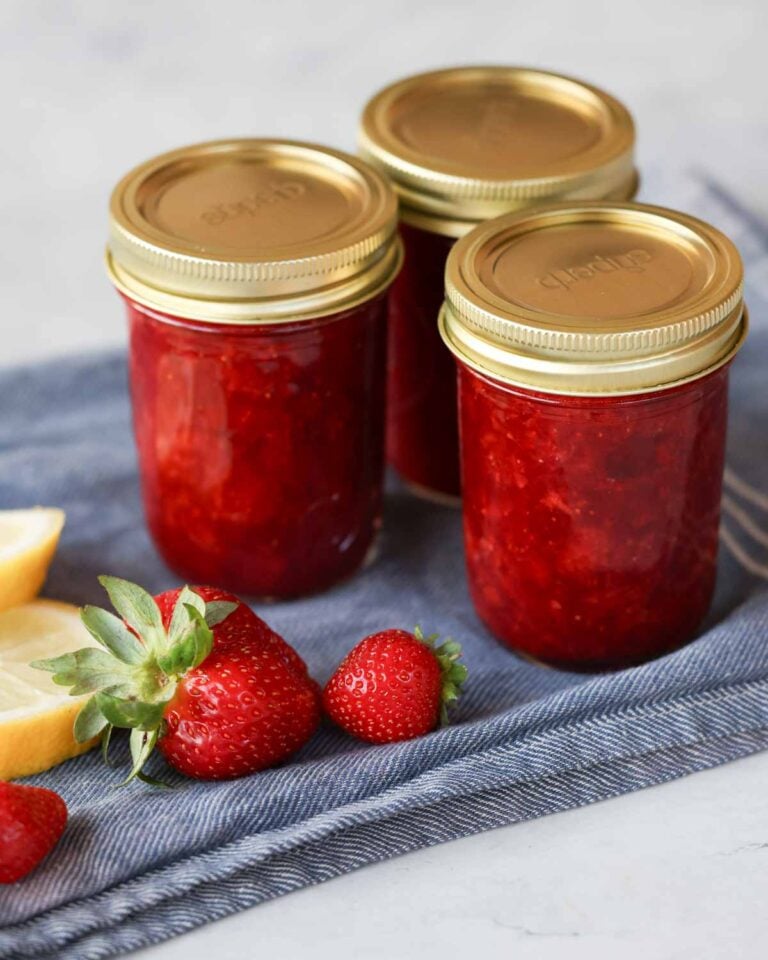
STEP 11: Bring to a boil and process for 15 minutes. Remove lid, turn off heat, wait 5-10 minutes then remove jars. Let cool and store. (Jars stacked for picture, it’s best not to stack jars in storage)

Tips
- If you don’t want to boil down the ketchup in a pot, you can also use a crock pot or an electric roasting pan. We used this last year, and it makes a darker red color finished result but the taste and texture are the same. The benefit of this is that there is no boiling liquid splashing up and burning you. I also get tomato splatters all over my kitchen when I boil in a pot. You also don’t need to stand there and stir constantly. We keep the lid off the the crock pot and roasting pan so the liquid is able to evaporate quickly.
- If you don’t have a food mill or sauce maker, remove the seeds from the tomatoes prior to roasting. Tomato seeds are so bitter and will ruin a finished sauce. Remove the skins after roasting and use a blender or food processor instead to get a super smooth finished ketchup for canning.
Video Tutorial
If you prefer to see how to make ketchup check out my video.

FAQ
No. The seeds are so bitter it will ruin the ketchup. The skins even after blending well are still present. I find the texture very off putting, however, I do have a few family members that don’t seem to mind it. So whether or not you add the skins is a personal choice.
No, it’s not necessary. However, if you want the smooth texture that is characteristic of ketchup, blending it at the end makes a HUGE difference.
If you made this Ketchup or any other recipe on my blog please leave a 🌟 star rating and let me know how it went in the comments below. Thanks for visiting!

Ketchup for Canning
Equipment
- 1 Blender immersion blender works well too
Ingredients
- 2 teaspoons celery seeds
- 4 individual whole cloves no teaspoons or tablespoons just count them out
- 5 individual whole allspice
- 3 cups vinegar half white and half cider (5% acidity)
- 24 lbs tomatoes
- 3 cups chopped onions
- 1/2 teaspoon black pepper
- 1/2 teaspoon cayenne pepper
- 2 cups granulated sugar
- 1/4 cup canning or pickling salt
- 1 tsp dried garlic
Instructions
- Turn oven to 425ºF
- Make a spice bag by taking cheesecloth and cutting out a square. Add celery seeds, cloves, and all spice on top of the cheese cloth, then tie in a knot or use twine to tie it together. (Some of the celery seeds may fall out, that's ok!)
- In a stainless steel saucepan, add the vinegar and the spice bag. Bring to a boil over high heat, then remove from heat and let it sit for a half hour with the spice bag in it. Then discard the spice bag.
- Meanwhile, cut tomatoes in half and core. (For Roma or San Marzano tomatoes, no need to core, just cut in half.) Place tomatoes cut side down, with one layer on baking trays and roast tomatoes for 1 hour at 425ºF.
- While the tomatoes cook, sauté the onions for 5-10 minutes on medium low heat until soft and translucent.
- After the tomatoes finish, use a food mill or sauce maker to remove skins and seeds. *Include all the released tomato juices on the tray as well as roasted tomatoes to food mill ensure proper acidity. Discard the seeds and skins.
- Place tomato sauce in a very large stainless steel saucepan.
- Add onions, sugar, salt, vinegar, cayenne pepper, black pepper, and dried garlic to the saucepan with the tomatoes.
- Bring to a boil, then reduce the heat and let it simmer, stirring frequently, until it becomes the desired thickness.
- While reducing the liquid, prepare a water bath canner and half pint jars.
- Working in small batches, transfer the mixture to the blender and puree until very smooth. Return all the pureed ketchup to the pot. Alternatively, you can keep the sauce in the pot and use an immersion blender. (Use caution if your sauce is hot. Keep a hand on the blender lid so it doesn't pop off)
- Ladle hot ketchup into half pint jars leaving a 1/2 inch of head space. Wipe rim. Center lid on the jar. Screw on the band with until it is finger tip-tight.
- Place jars in canner and ensure the jars have at least one inch of water above the tops of the jars.
- Bring to a boil and process for 15 minutes. Remove lid, turn off heat, wait 5-10 minutes then remove jars. Let cool and store.