How to Build a Winter Emergency Car Kit & printable checklist
Building a winter emergency car kit gives incredible peace of mind, especially if you need to drive in winter weather. There are so many possible scenarios where having a few basic helpful items could be lifesaving.
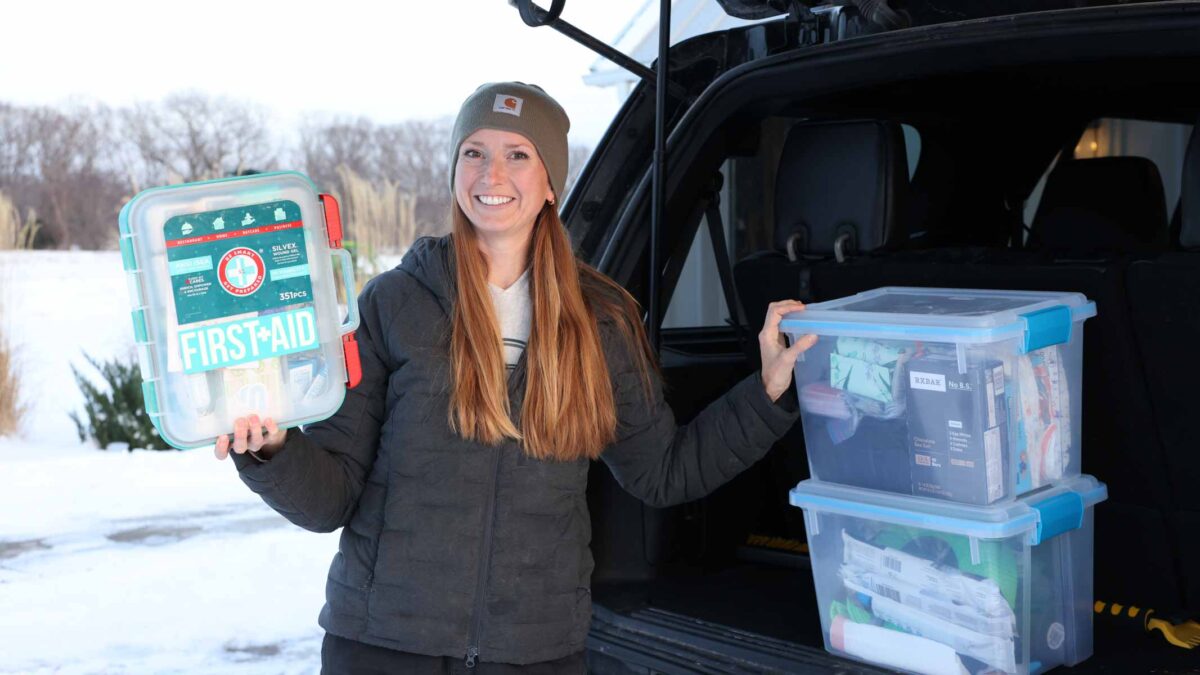
I remember reading a few years ago about a 22 year old woman who was driving home in a blizzard and didn’t make it home after getting stranded. That story is so heartbreaking!
After I read that I knew we needed to do better at being prepared for a winter emergency not just at home but also having the right things ready in our vehicle. This is good practice for anyone who drives in winter.
Also keep in mind that these are items for PRACTICAL PREPAREDNESS. We keep these items in our car not just for some kind of dire emergency but for everyday life too. They cover all your bases. A list like this isn’t going to look the same for everyone but hopefully the list we use will give you a good starting point.
Also, being prepared isn’t always just about helping yourself. If you have supplies, it enables you with the ability to help others in need too. A tow strap could help you pull out a neighbor from a ditch.

Core Safety Essentials For the Car in Winter
We’ve made a comprehensive list of everything that could be useful in an emergency. However, there are some core items that must-haves. Building a kit can be a process and expensive. So if you want to start somewhere, get these first:
- Whistle
- Pocket Knife
- Seat belt cutter/ window breaker tool
- Jumper Cables
- Tow Strap.
- Emergency Blankets
- Large filled water bottle
- First Aid Kit
- Handcrank radio/ Flashlight combo
- Solar Power Bank
- Medical Necessities (as needed)
- Backpack
Where to Buy Items for Your Kit
I bought several items locally at Walmart but some things are hard to find. With little babies it’s hard for me to bounce around to every store to find good prices so for everything else, I got it from Amazon. Here is our comprehensive list of what we bought.
Food and Water
Even on a day to day basis, I can’t tell you how many times having food and water in my car have saved us. We weren’t in an emergency situation but it just makes life easier too. I often get faint and dizzy if I don’t have food for a while and it’s not safe for me to drive. If I don’t remember to bring food with me and that situation occurs, I dip into our emergency supply and then make sure to replenish it soon after.

Food:
Individually wrapped high protein and high calorie snacks
Usually we make all our own snacks, but this is one place where I purchase prepackaged snacks for the sake of longevity and not worrying about them going bad.
If you have picky kids, make sure it’s something they will eat too. We rotate out the snacks every 3 months or so if they don’t get consumed.
Freeze Dried Meals
If you are traveling longer distances, I recommend packing a little more food. Cam has homemade freeze dried ready to eat meals in his kit because he does long drives with the kids for church activities and occasional sporting events.
Water:
A Filled Water Container
Some people always carry water with them into the car. I’m one of those people. However, I’m often traveling with my family which includes 7 others. They deplete my water bottle quickly so it’s important to have enough for everybody stored in the car.
You could buy a pack of plastic water bottles but we are often replenishing and rotating our supply so I just use the stainless steel refillable ones.
Water is essential for survival, but can also be used as radiator coolant, and for washing wounds.
Lifestraw
I also keep a couple lifestraws in my car. If you haven’t heard of it before, it’s basically an on demand water filter. You can suck up water from a stream or creek and it filters out anything that would potentially make you sick. I hope I never need to use them but it give me a lot of peace of mind to have several at home and in our car kit.
Vehicle Recovery & Road Safety Gear

Ice Scraper and Snow Brush Where I grew up in upstate NY, having a full ice scraper and snow brush is standard in every car. We literally would not be able to get from point A to point B without one.
I know some of you northerners will giggle at this being mentioned because it’s one of those things that you just think everybody has. However, I quickly learned when we moved to the south that not everyone carries one in their car. So if you don’t have one and live in a place that gets ice or snow occasionally, you need it.
Jumper Cables This is another standard car item that most people already have. Cam says every car driving on the road SHOULD have these in their car.
Traction Pads The most common thing to happen to most people in a storm is to slide off the side of the road. If you keep traction pads with you it can help you easily get back on the road.
Traction Pads can be expensive so if you want to load your car with something a little more budget friendly a bag of sand or kitty litter is a good alternative.
Tire Chains This is optional based on your location and conditions.
Tow Strap Even if you don’t have towing capability, this is useful if you need to be pulled out by someone else
Collapsible Shovel I would recommend getting a little military type shovel. It’s versatile for all season emergencies.
Seat belt cutter/ window breaker tool A seat belt cutter and window breaker tool is useful not only in winter but at all times. Some possible scenarios include: If your car goes in water and you need to get out, your car is covered in snow and you can’t open the door, if you’re in an accident and your door is pinned closed, or if there is a fire and your door is pinned closed. It’s $7 for a basic one. Just get it!
Reflective Vest This is a core safety item if you find yourself on the side of the road changing a tire or stuck in the snow. Visibility may be low and a reflective vest helps others around you see that you are there.
Extra fuel container (Empty) I consider this to be a more optional item. Most of the time if you need to fill up a container with gas to bring to your car, you can purchase one at the gas station. There is a small risk of there not being one available.
Whistle If you go into a ditch in whiteout conditions, people may not know you’re in distress. Cars can quickly get covered in snow and cell phone signals aren’t always reliable. So if you need help you need to be heard above the wind. A very loud whistle helps you to be heard.
Heat & Dryness Items

Hand Warmers These are so handy to have in the car. Recently we were filming moving our cows in frigid temperatures and even though I had gloves on my hands turned cold and numb after a few minutes. In order to work the camera, I have to take the glove off and on. I grabbed a couple of hand warmers from the car, put them in my gloves, and my hands stayed warm the whole time.
I’m glad we haven’t needed to use them for a real emergency yet but it definitely is an item that seems quite valuable!
Thermal Blankets Mylar blankets are perfect for the car since they are small but when used they help you retain your body heat. The goal is to never have to use these, but in the rare chance you do, you’ll be forever grateful you’ve packed these.
Flint and Steel or a Lighter I prefer flint and steel as a fire starter since it’s not reliant on fluid.
Outdoor Apparel Pack extra wool socks, warm gloves, hats, and a pair of snow boots if you have space. I don’t keep these items in my kit because the space in my car is so limited. But it’s a great option if you have some extra room!
Paper Towels, Cloth Towels Having some small towels in the car is a must. From a practical perspective, there have been so many times that we’ve used these items. We’ve experienced everything from a kid getting car sick to a spilled food or drink item. They are totally worth having in your emergency car kit!
Rain Poncho Getting wet in freezing temperatures is a recipe for disaster… or hypothermia. Rain ponchos help you stay dry and warm.
Wool Blanket Even though a small thermal blanket will help, if you have extra space a wool blanket is great for in the car. I keep one up front and put it on the toddlers when we drive around in winter.
Communication and Navigation

Solar Power Bank If you’re stranded and your car runs out of fuel, you’ll want to have some other options rather than the car battery.
Extra Charging Cables The power bank and car battery won’t charge your communication device if you don’t have the right cables. I always have a couple charging cables up in the front of my car but I don’t count on them in an emergency. There have definitely been a few times when an unnamed teenager grabs one of my charging cables from the car because they can’t find theirs.
Pens, Permanent Markers, and Paper
Paper Map A paper map may not seem useful these days but in the event that a phone isn’t working, communication towers are destroyed, you don’t have cell signal, or the internet is down a map would be very necessary and helpful.
Solar Weather Radio/ Flashlight (Hand Crank) We love this multipurpose radio. It taps directly into the weather radio signal and has a flashlight on the front. I also like having a flashlight in the car that isn’t reliant on batteries.
Small Useful Items

Pocket knife A pocket knife is useful for so many things but a few that come to mind are repairs, cutting rope, making fire tinder from a stick.
Small tools Cam keeps a little multi-tool in his emergency car kit for small repairs or really anything else that needs it.
Trash Bags can be used as a vapor barrier on the ground if you need to change a tire and not get soaked from snow, can be used as a poncho to keep you dry, or can be opened and used for protection if making a shelter. This is in addition to its normal use.
Super Glue This can be used to fix gear and even though it’s not normally recommended, it can also help seal a wound shut. For wound closure you’ll want to clean the wound, close it, then wipe the glue over the top on the skin. Don’t put it in a wound and use it with caution since it may be irritating to some people and do more harm than good.
Gorilla Tape or Duct Tape This has the same uses as the glue mentioned above, fixing items and it could be used as a butterfly bandage for closing a wound.
Paracord Paracord can be used for lashing, making a shelter, fishing, and more.
Personal & Family Needs

Books and/or playing cards These are great for if you get stranded on the side of the road. You’ll probably want to keep your phone charged for communication so having some other things around to pass the time is so useful.
Feminine Products Pads are probably the most practical to have in your kit even if you don’t normally use them. They can be used for other things in an emergency too.
Toilet Paper I actually don’t have toilet paper in my kit because we have baby wipes. They are a lot nicer to use, unless of course the baby wipes are frozen solid. In that case a little bit of toilet paper would be handy.
Diapers If you have kids in diapers, you’ll definitely want some extra in your emergency kit. The biggest thing to remember is to switch out diaper sizes when your baby sizes up!
Wipes Wipes are another thing that need to be switched out often. They will dry up if left for a long period of time. I also had someone tell me they will freeze if you leave them out in temperatures below zero. My car is almost always in the garage, so I’ve never had that happen.
First Aid Kit You can buy a premade kit or make your own. Wound care supplies are useful at all times and keep some mild painkillers like Ibuprofen or Acetaminophen on hand. I actually keep a little bit of lip balm in our first aid kit too. We can hardly go a few hours without it so I make sure I have extra in case!
Tourniquet (Maybe) I’ve had several people tell me that a tourniquet is also necessary for emergency first aid. I still need to do my own research and talk to our doctor friend so make sure this is recommended.
Other Medical Necessities If you are dependent on prescriptions, store a little extra in your car. Things like an epi-pen need to be stored under certain temperatures so don’t keep that in your car but I would definitely carry it in a purse or other bag so it always travels with you if the need arises.
Pet Needs If you have animals that go around with you in the car, you’ll need to bring items for them as well. Some examples of what you might need for a pet include food, water, leash, collapsible cage, and a blanket.
Containers to Store Your Emergency Car Kit
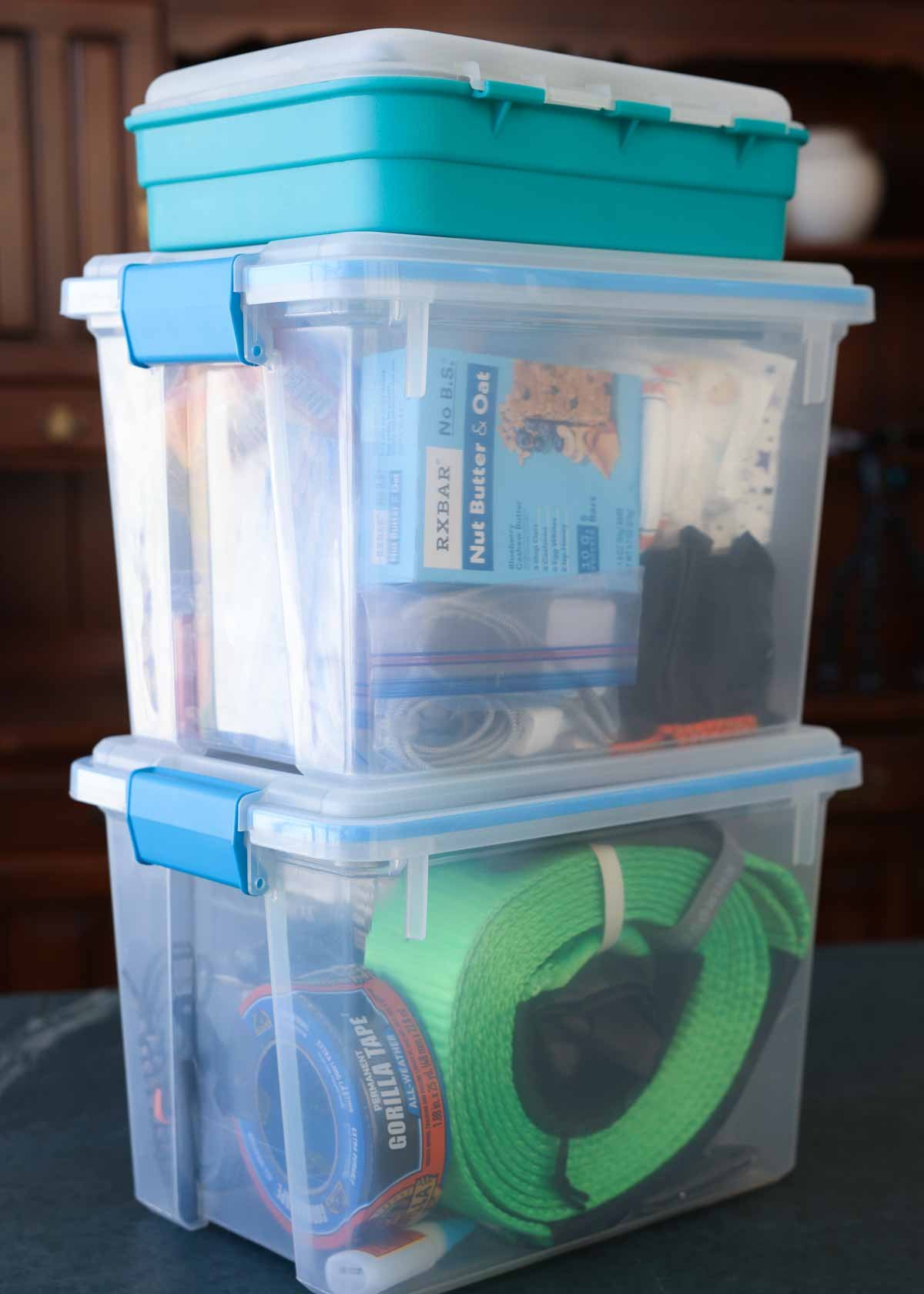
Backpack A backpack is a great container because if you ever need to leave your car and take off on foot, you have a way to carry some items with you.
Water Resistant Containers I picked out some plastic storage containers that fit the exact dimensions of our tiny bit of trunk space. These containers keep the items inside dry and they are also good for all the things you don’t want to get crushed. I picked clear so I can easily see what is inside each one.
Maintenance for Your Kit
One of the biggest mistakes people make with emergency preparedness is they put together a kit like this and then think they are ready and don’t need to do anything else.
Your kit will need to be restocked if it gets used, water needs to be switched out, food needs replaced every 3 months, and all the electronic items like solar chargers should be checked periodically. The glue may dry up, feminine products need to be switched out, and hand warmers may not work anymore.
The way I remember to check is at the beginning of each season I look through the kit and rotate things out. A winter car kit looks very different than a spring and summer one!
The little talked about prep that is VERY Important
It makes us all feel a little better to have some emergency items. When it comes to being prepared and surviving emergency situations, one of the most valuable things to have is good physical health.
You need to be in good shape and eat healthy. It’s so important to exercise often and move your body. You never know when you’ll need to leave your car.
Final Thoughts
As mentioned above, our emergency car kit isn’t just for a disaster, it’s practical for every day needs. I am very much a practical prepper and feel the “end of the world” extreme preparation is unrealistic.
If the world comes to that kind of end, it’s our spiritual preparation that matters most, not a stockpile of food or ammo.
But on a day to day basis, a little practical preparation is wise for you, your family, and gives you the ability and tools to help others.
Some say it’s not possible for those with a low income but it is possible to be prepared even if you don’t make much money. It all comes down to priorities. Get rid of streaming services, the expensive phone, and stop going out to eat.
If you make it a priority, you can do it. I’ve had a few of my readers who live on social security alone tell me they did it! I hope that’s encouraging if you are in that or a similar situation.