
Potato Plant Growth Lifecycle: 5 Stages (with Pictures)
Knowing the stages of potato growth is so helpful to growing the best potatoes. It will help you know what to watch for, the best time to hill them up and later to harvest them, and can help you fine tune your watering and fertilization.
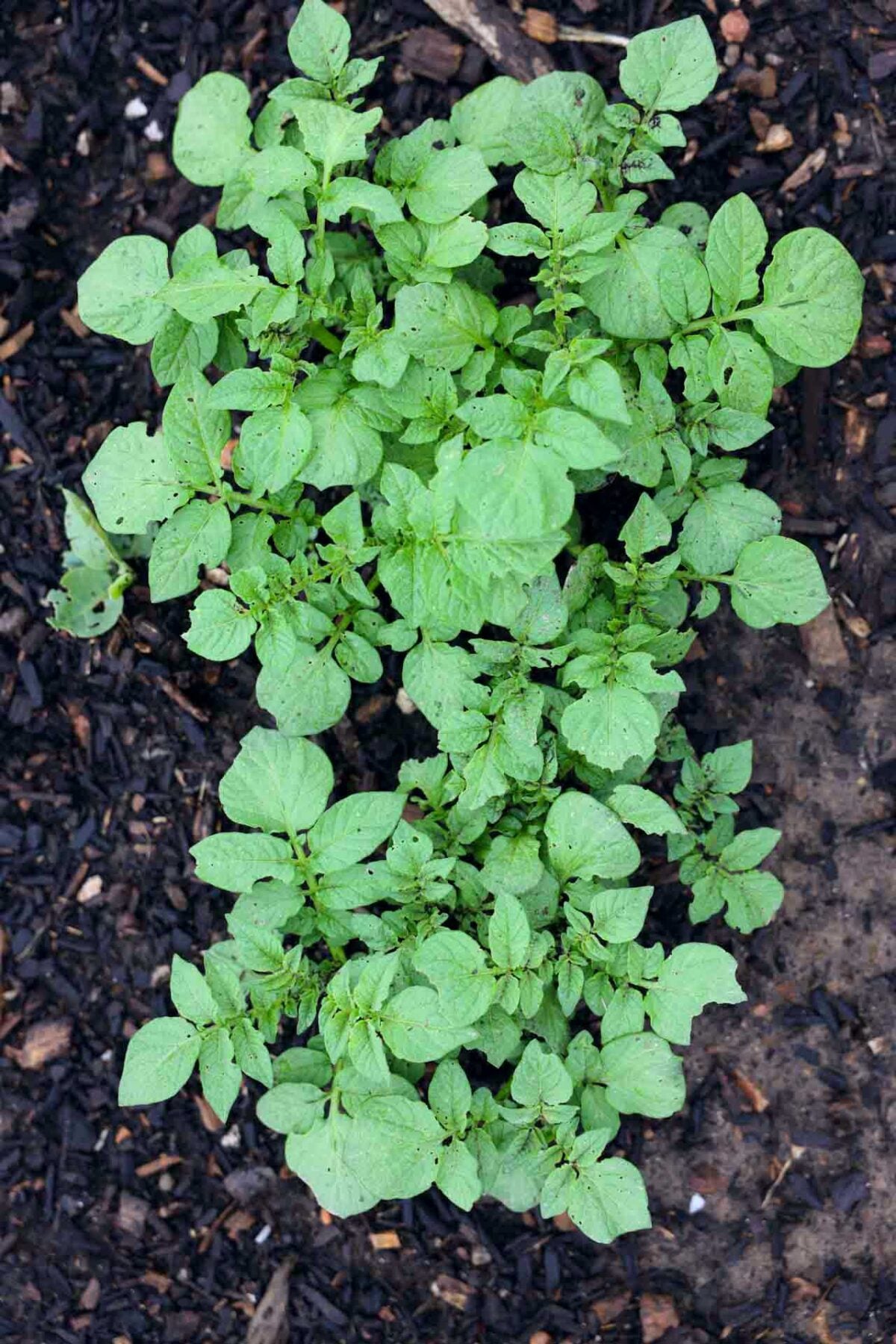
Below you’ll find the stages of potato growth with pictures from my own garden and my twenty years of experience.
Note: Days of growth is not exact because different varieties grow at different rates. Therefore, you’ll see some overlapping in days in the phases of growth and the lifecycle of a potato.
For example, an early season potato like Yukon Gold can take 75-80 days from planting to harvest. On the flip side, a late season potato like Elba or Russet can take 120 days to mature and be ready to harvest.
Sprouting
DAY 0-30 of GROWTH
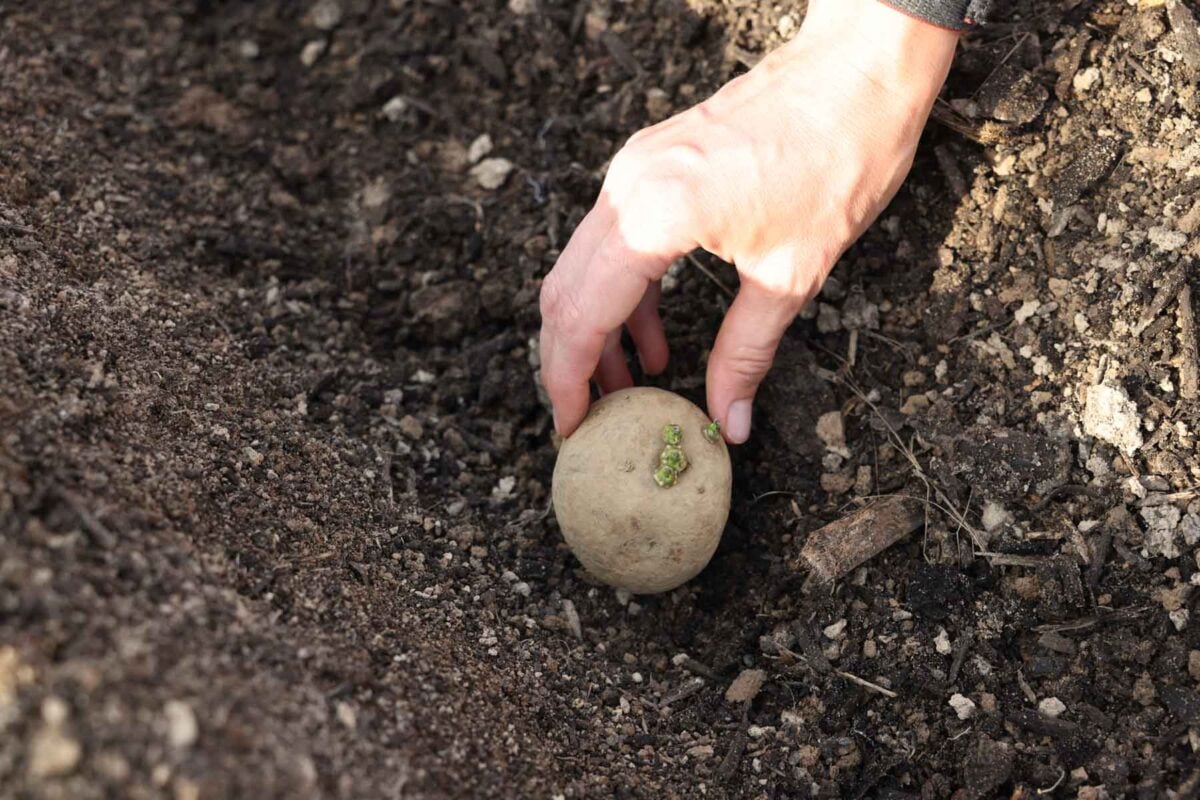
Sprouting is the first stage of potato growth. You can do this by planting the potatoes directly in the ground. However, the more common and foolproof method is to “green sprout” or “chit” the potatoes. What that means is the potatoes are allowed to warm up and start to get spouts from the eyes.
The sprouts turn green because they are exposed to light, hence the name “green sprouting”. This process usually takes about 15 days.
After, the potatoes are planted in the soil and continue to sprout even more and develop small roots. It usually takes another 15 days for the green spouted potatoes to reach the soil surface and begin leafy green growth.
Whether you plant directly in the ground or do green sprouting the total days from the start of sprouting until the potatoes reach the soil surface is usually around 30.
Vegetative Growth
Day 30-60 of growth
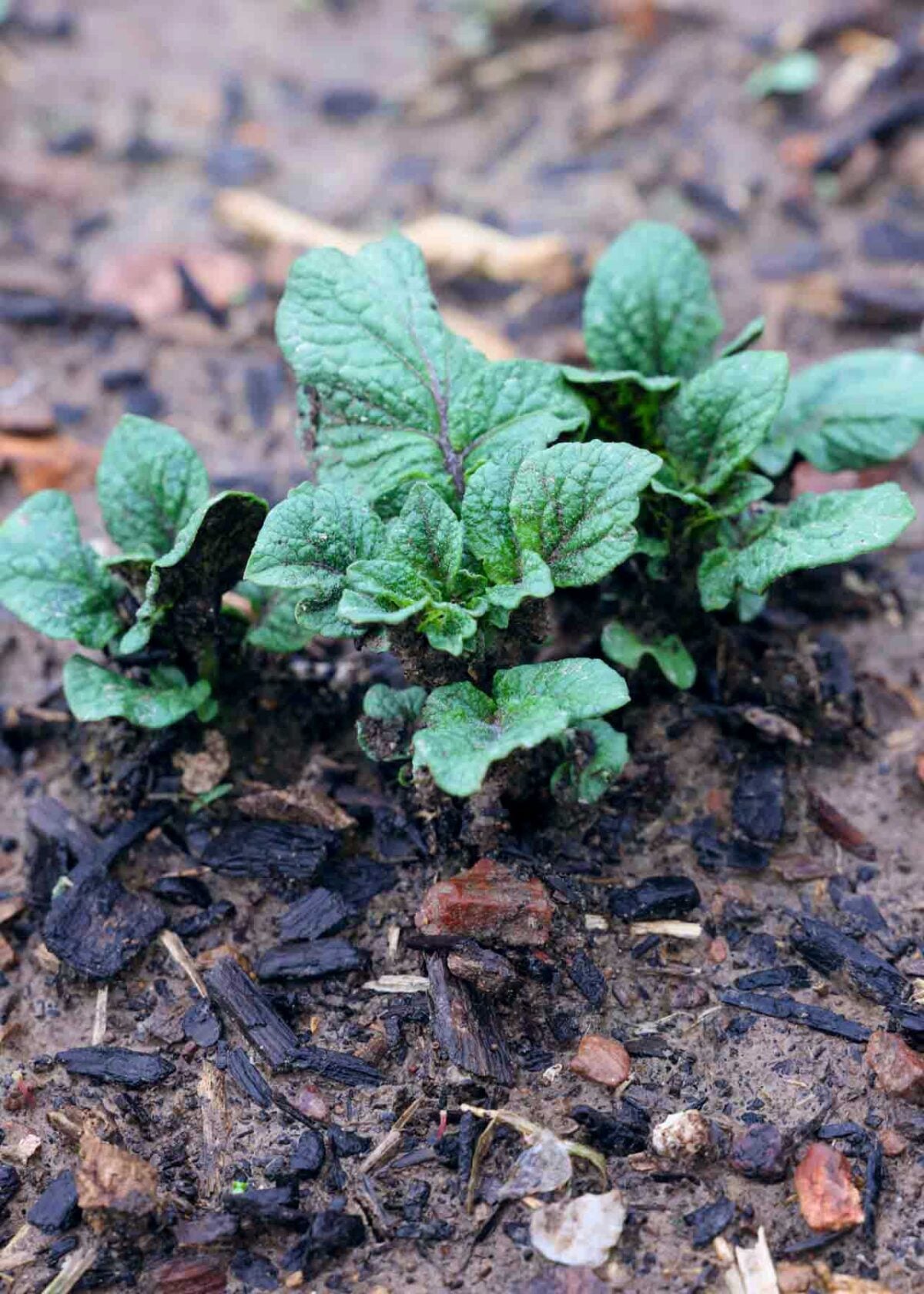
It is so exciting to start seeing growth pop through the soil and the stems and leaves start to form above ground, this is the vegetative growth stage or the second stage of growth.
This is the time when the leaves and stems are growing rapidly, soaking up sunlight, nutrients from the soil, and water and turning it into energy that feeds the plant.
Once you hit this stage, every potato plant grows at different rates depending on the variety. There are early season, mid season, and late season varieties.
Near the end of the vegetative growth phase and the beginning of the tuber growth, when the green growth reaches 4-6 inches tall, you’ll want to hill the potatoes. I don’t count days for this but wait until I see visually the height is enough. Here’s more information on hilling potatoes and the why behind it.
Tuber Growth Begins and Possible Flowering
Day 50-70 of growth
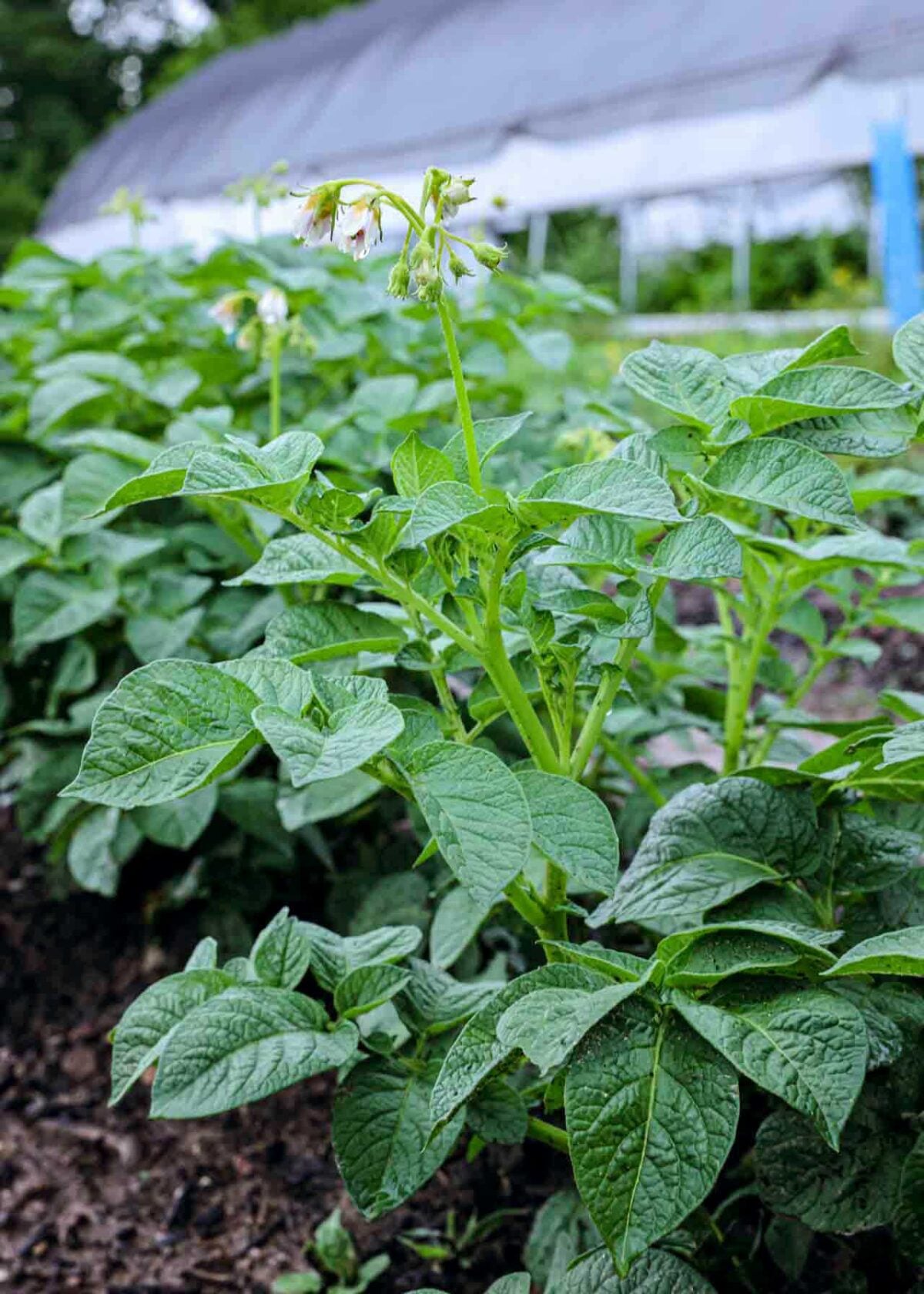
After the vegetative growth phase, tubers (or in other words, potatoes) start to form under ground. They start as pea size potatoes, soon grow to the size of golf balls during this stage.
Sometimes potatoes will flower when they reach this point. Not all varieties of potatoes flower, so if yours never do, don’t worry. But flowering is a good indicator you’ve reached this stage and sign that the plants are healthy thus far.
Tuber Enlargement

Day 60-120 of growth
At tuber enlargement the potatoes grow from golf ball size to full size. You can harvest “new potatoes” or freshly picked immature potatoes anytime during this stage. Don’t pull up the whole plant, just dig down and enjoy a little sneak peek at the harvest by picking a few and let the rest grow to full size.
At this stage the potatoes may start to look tired, and not as lush and green. Don’t worry! They are focusing all their energy on growing potatoes below.
Maximum tuber formation occurs when the soil temperature is between 60º-70ºF (15-21ºC). Tubers will not form when the soil temperature goes above 84ºF (29ºC).
It’s no problem for most northern growers, but for those in the southern US, it’s important to plant early and grow early maturing varieties. If the plants are hilled with soil deep or covered well with hay or straw, the soil stays much cooler and that will help you grow larger potatoes.
Make sure the plants get consistent water at this stage. That means they should have two deep waterings per week. The standard is one inch of water per week. If you are a new grower and don’t understand what that means check out this article explaining how to water that amount.
As a personal example, if we don’t get rain, I water 30 minutes with drip irrigation twice a week.
Maturation & Die back
Day 80-120 of growth (check your variety for specific timing)
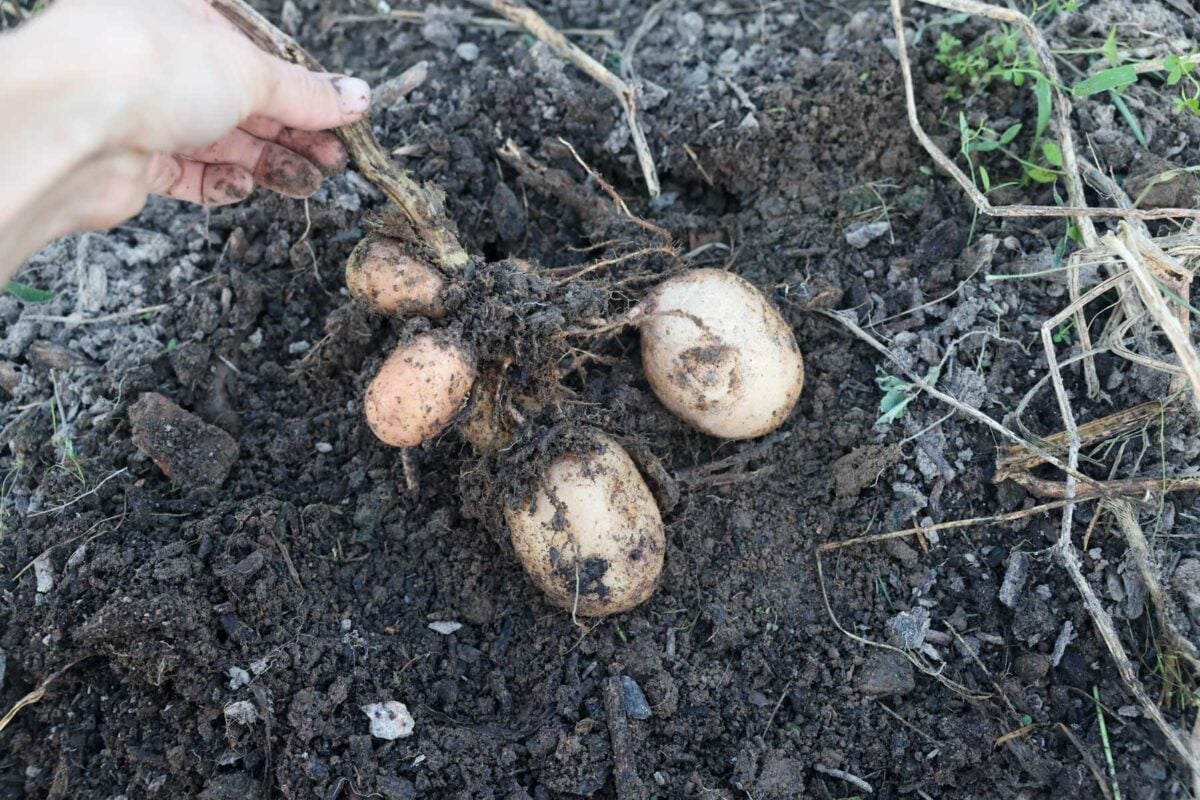
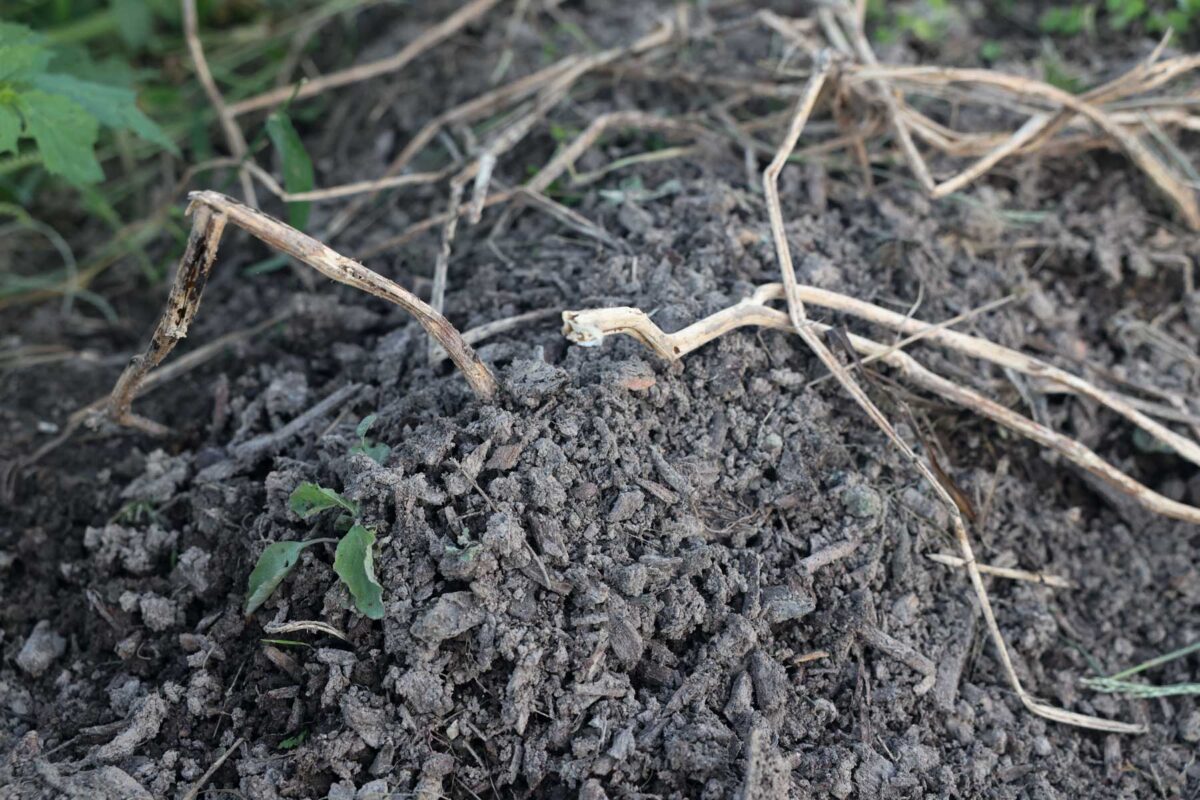
As the potatoes near maturity the green growth turns yellow, then brown. It will get dry and crispy. If you want your potatoes to store for longer, wait until the stems are brown. This allows the potato skins to toughen under ground.
Once that occurs, you can carefully harvest the potatoes. Dig them up on a dry day and it’s ideal if the soil is also rather dry.
Here’s an article I wrote with more specific information on when to harvest potatoes.


