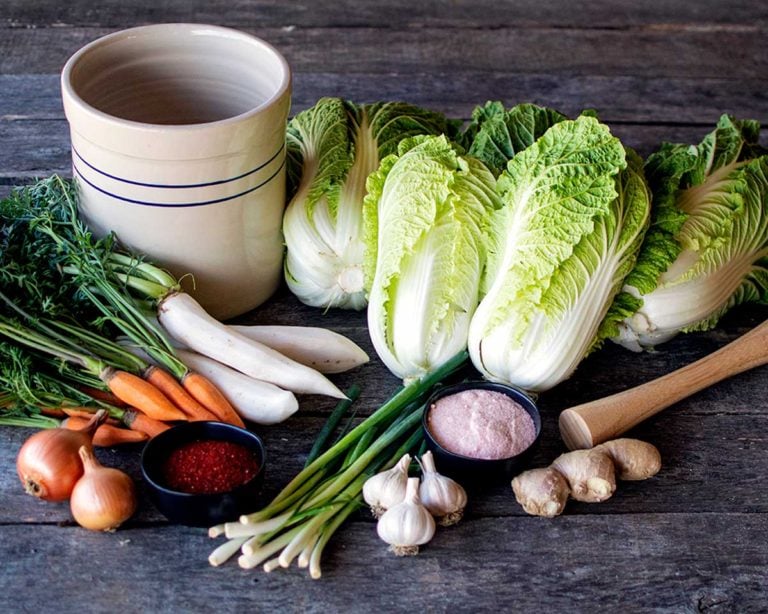
Lacto Fermented Dill Pickles
These lacto fermented dill pickles are packed with gut healthy bacteria and easy on digestion. They are so easy, tangy, and perfect for a snack or on a sandwich.
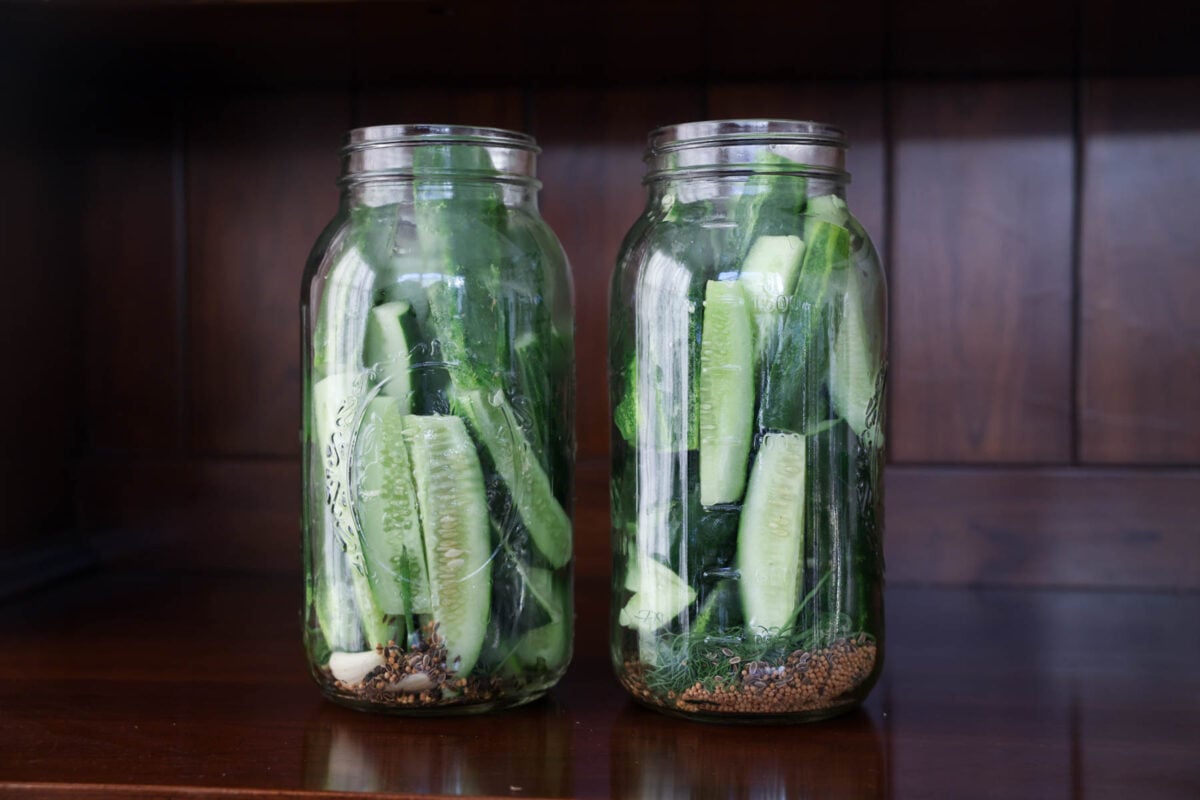
All you need to get started with lacto-fermentation of vegetables is: Microbes, Vegetables, and Salt. Make sure your cucumbers are freshly picked and organically grown if possible.
During my struggle with health problems fermented vegetables were the main thing that really helped me feel better. I started by learning how to make kimchi, then branched out and now make all kinds of fermented foods.
Aside from these pickles and the kimchi, we also love cucumber kimchi, fermented minced garlic, and one of my personal favorites is our fermented peppers with garlic and lime.
Why You’ll Love This Recipe
- Easy to make. Add cucumbers, spices, mix up a brine, pour it over top, let it ferment and it will last a LONG time in your refrigerator!
- No Fancy Equipment required. You don’t need a canner, dehydrator, or anything expensive. With fermentation you can start with a homemade weight (a smaller glass jar) and cover with a towel during the fermentation process. Airlock, water-lock, or pickle pipes give a better end result but aren’t necessary.
- Filled with natural probiotics. Homemade ferments are a great way for your body to get tons of probiotics and good bacteria.
Ingredients

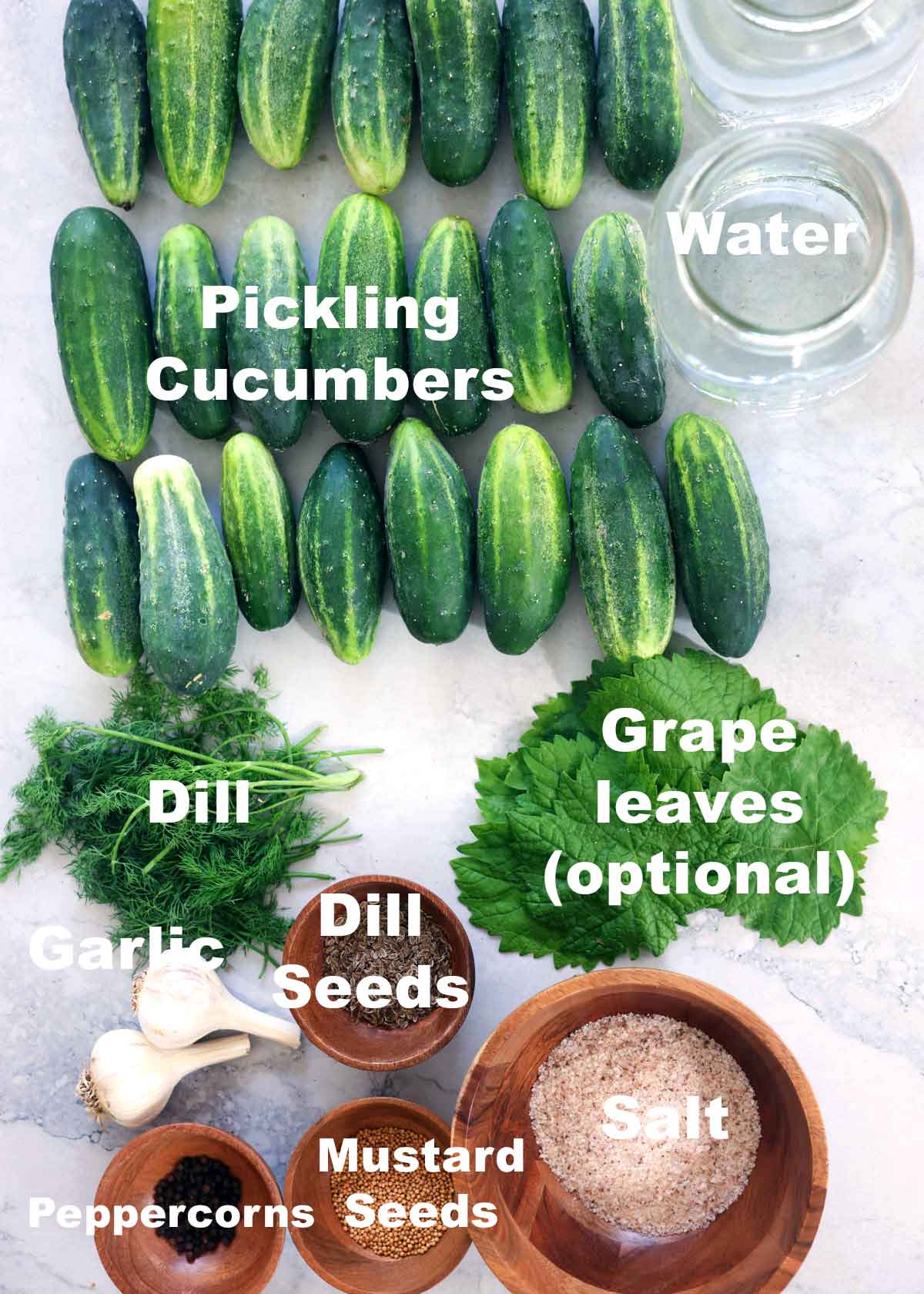
Cucumbers– Small, freshly picked pickling cucumbers are best for this recipe. The more firm your cucumbers are, the more crunchy the end result will be. Try and use organic cucumbers if possible.
Water– It’s important to use water that has no chlorine in it. Chlorine will kill all the beneficial bacteria needed to get the ferment to work properly. Filtered water is ok! But the ideal water to use is spring water or well water.
Fresh Dill– Sometimes fresh dill spring can be hard to come by. If that is the case and you can’t find any, you can omit it. The dill seeds in this recipe still give a dill flavor. However, if you do have dill you’ll definitely want to add it! It’s delicious!
Salt– It’s very important to use a salt without additives when doing ferments. I love Redmond Real Salt because it’s sourced in the US, is all natural, and has lots of minerals our bodies need! (P.S. You can use my code SEASONALHOMESTEAD for 15% off)
How to Make Fermented Dill Pickles
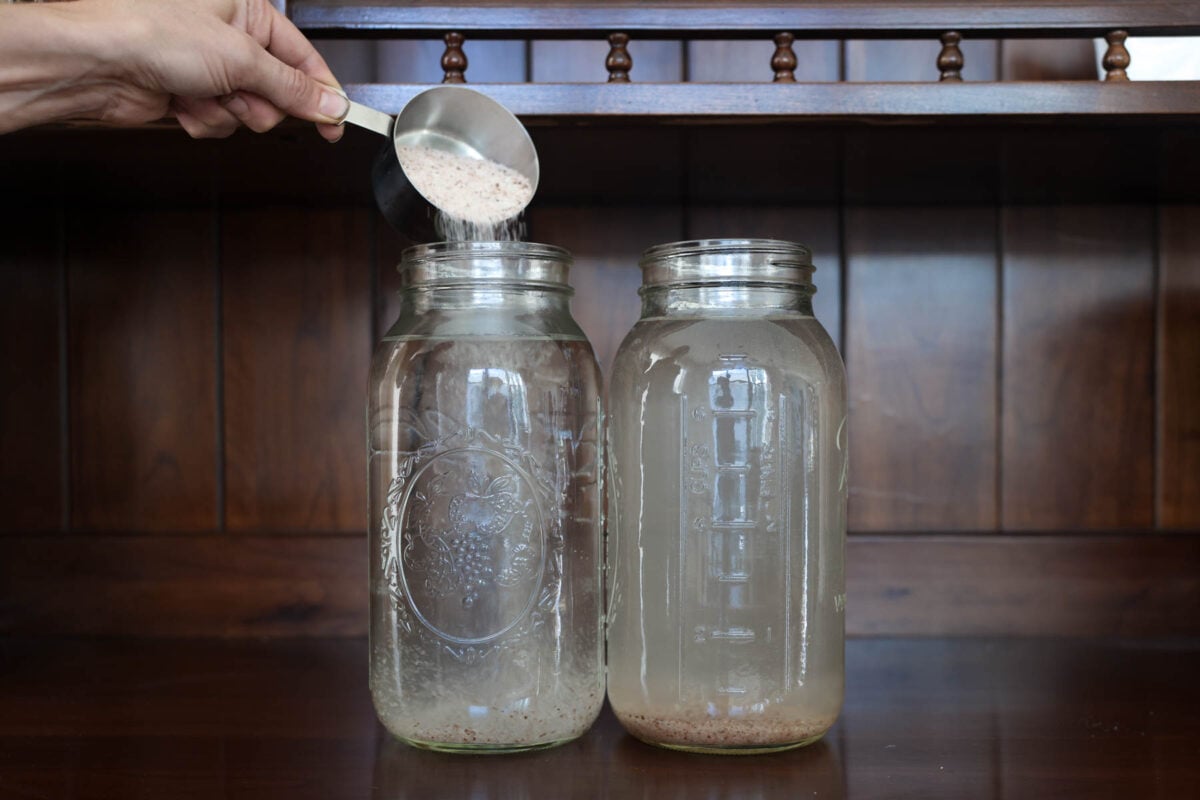
STEP 1 Make the brine by mixing uncholrinated water and sea salt together. Do not heat. Stir until most of the salt is dissolved.
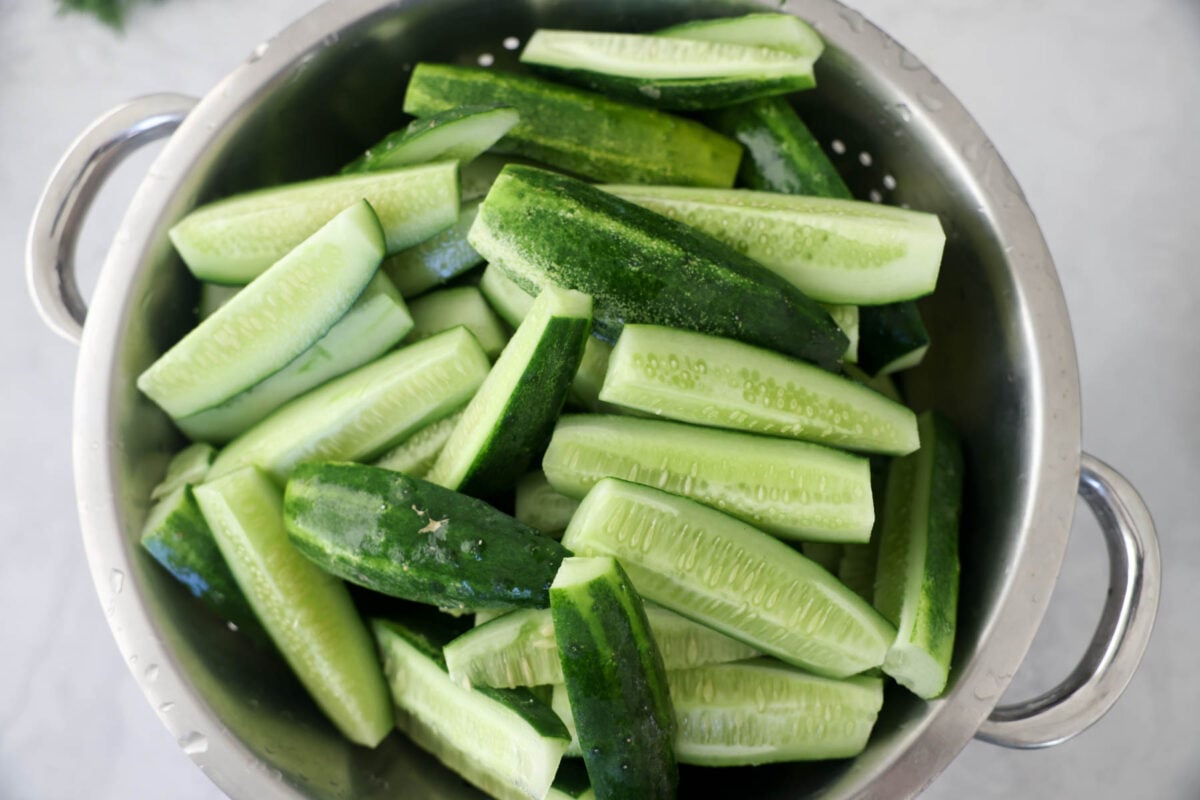
STEP 2 Rinse cucumbers and cut off both ends. Slice into Spears.
STEP 3 Split the mustard seeds, dill seeds, dill springs, peppercorns, and garlic equally between jars. Pack the cucumbers into the jars.
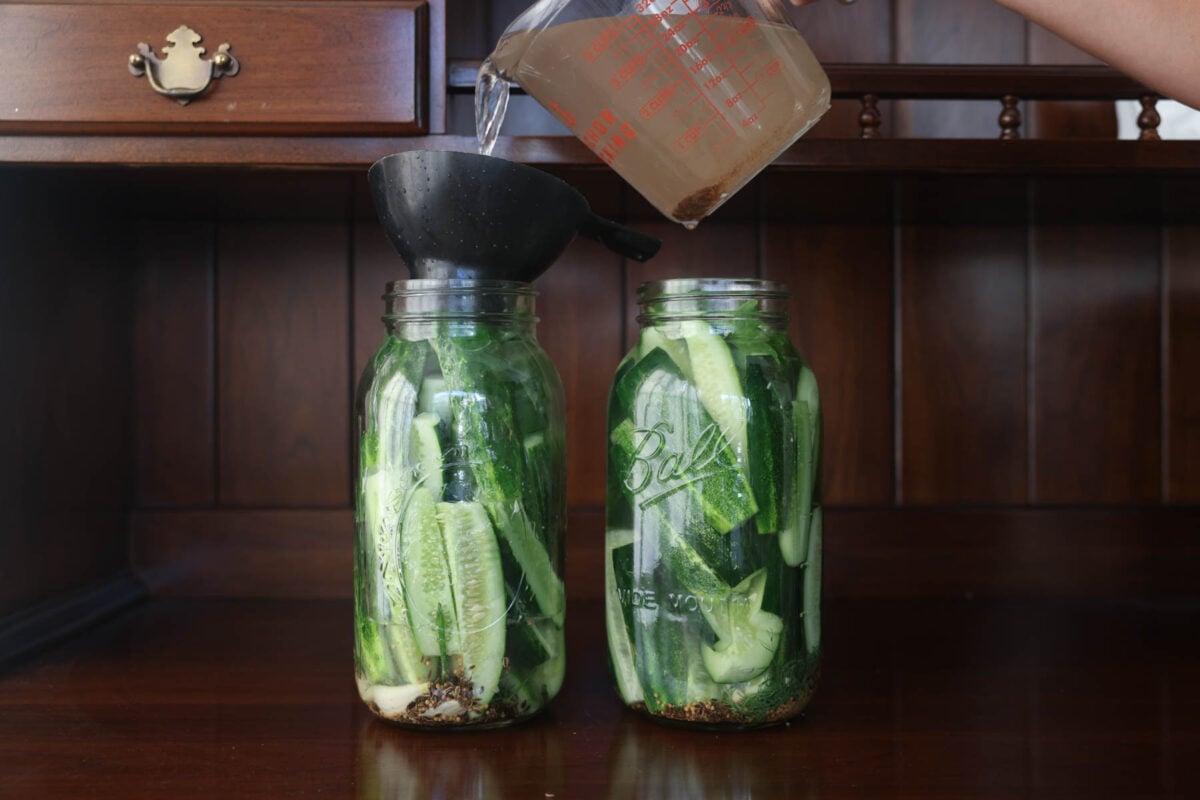
STEP 4 Top with a grapes leaves if you have them and fermentation weight. Pour the brine into the jars ensuring the cucumbers are submerged.
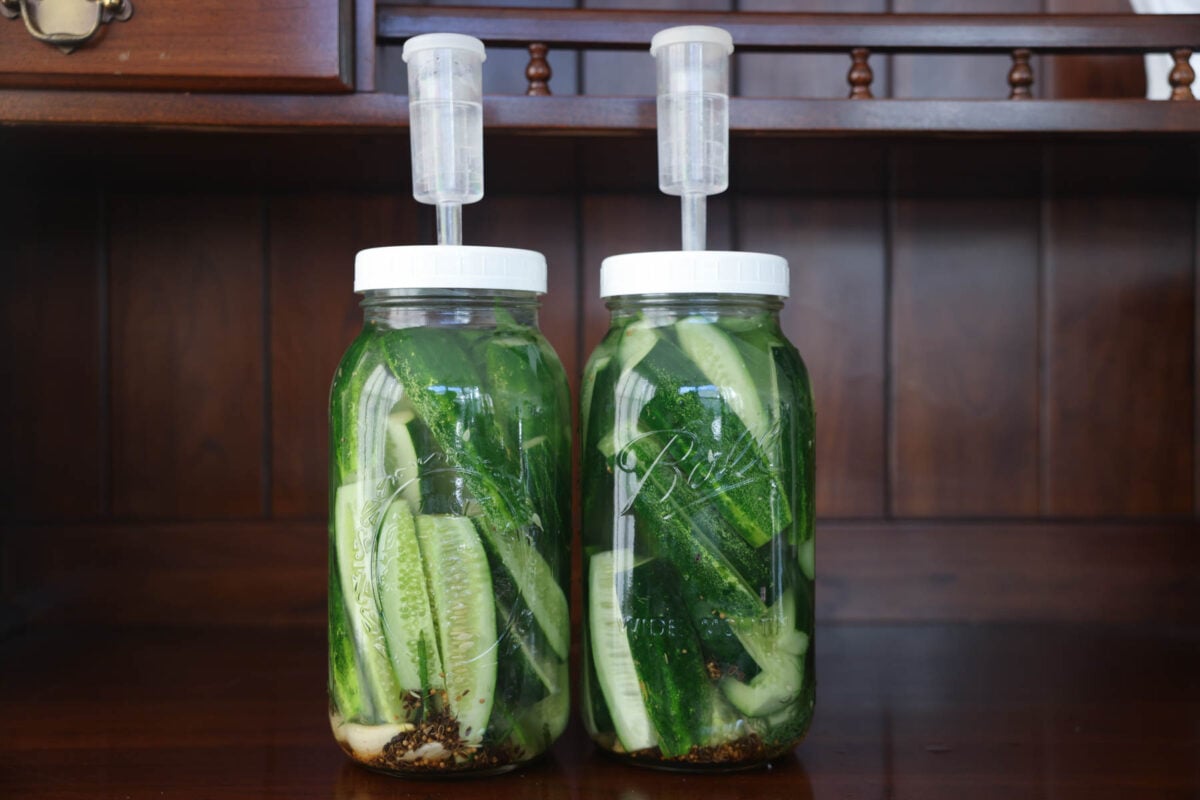
STEP 5 Finally cover with a water lock lid, pickle pipe, or cloth or lid covering. You can also use the ziplock bag method (see tips below). Ferment in a cool, dark place for 3-5 days. The longer you ferment them the more sour they will become.
STEP 6 When the pickles are ready, cover with a lid and store in the refrigerator. These pickles are most crunchy when used within 3 months but will keep for up to a year.
How to Make Fermented Dill Pickles Video
I’ve bookmarked where I make the lacto fermented dill pickles in this video!


Tips & Tricks
- No equipment? Try the Ziplock Bag Method: You can fill a ziplock bag with liquid (like water or more brine), seal it tight, and place it on top of the ferment. This is a good method if you don’t have special fermentation equipment. Use a heavy duty ziplock bag to make sure leaks are unlikely to happen.
- Cloudy brine is normal and happens when lactic acid is produced.
- You may see scum on the top, it’s generally harmless.
FAQ’s
Yes! According to a PubMed study, “During food fermentation, a number of chemical changes occur in the components of the raw matrix, which thus results in products with improved nutritional properties and healthy effects.
A higher bioactive molecule content and an improved antioxidant activity were found in fermented milks, cereals, fruit and vegetables, meat and fish.”
Fermented pickles use the process of lacto-fermentation. Lacto-fermentation happens when Lactobacillus bacteria convert sugars into lactic acid. Strains of this bacteria are naturally present on vegetables.
Vinegar is a finished product of fermentation. Since it’s already been through a two step fermentation process, it is already acid in pH. For vinegar pickles you don’t need to ferment them further.
Shelf Life and Storage
These fermented dill pickles stay crunchy for about 2-3 months but slowly will get softer after that. They will last up to one year in the refrigerator.
Fermented foods need to be kept 50ºF (10ºC) or below in storage. A refrigerator is the most common way to achieve these temperatures but a cool root cellar or other room that maintains these temperatures will also work.
If you want something a little less sour but still lasts over a month in the fridge, check out my refrigerator dill pickles recipe.
Other Fermentation Recipes
If you made this Lacto Fermented Dill Pickles or any other recipe on my blog please leave a 🌟 star rating and let me know how it went in the comments below. Thanks for visiting!
Equipment
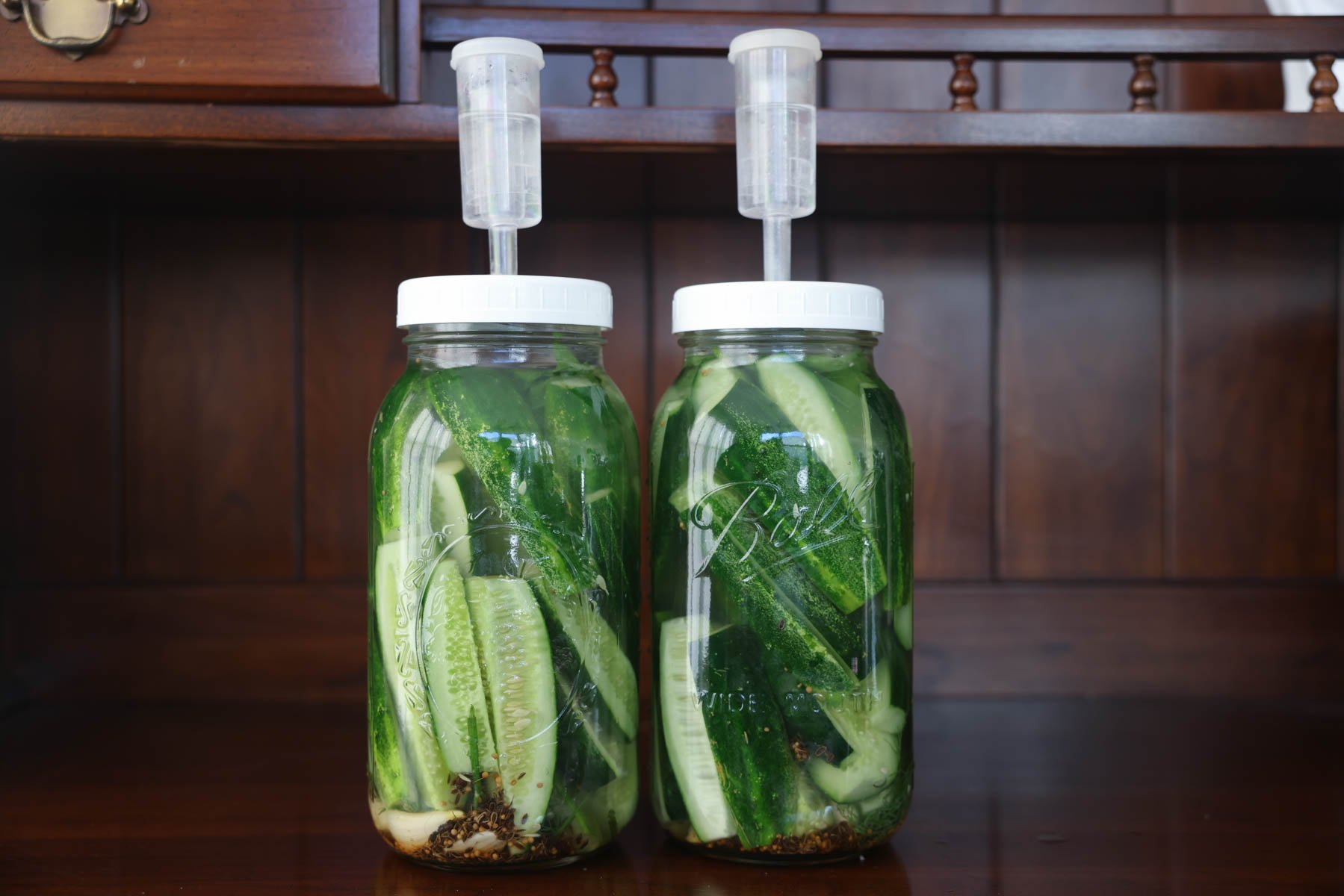
- 2 Half Gallon Mason Jars 64 oz
- 2 Fermentation Lids (optional)
- 2 Fermentation Weights (optional)
Ingredients
For the Brine
- 8 cups water filtered
- 6 tablespoons sea salt
For the Pickles
- 5 lbs cucumbers pickling type is preferred
- 2 tablespoons mustard seeds
- 2 tablespoons dill seeds
- 2 teaspoons black peppercorns
- 12 garlic cloves
- 4 grape leaves (optional)
- 2 fresh dill springs
Instructions
- Make the brine by mixing uncholrinated water and sea salt together. Do not heat. Stir until most of the salt is dissolved.
- Rinse cucumbers and cut off both ends. Slice into Spears.
- Split the mustard seeds, dill seeds, dill springs, peppercorns, and garlic equally between the jars. Then pack the cucumbers into the jars.
- Top with a grapes leaves if you have them and fermentation weight. Pour the brine into the jars ensuring the cucumbers are submerged.
- Finally cover with a water lock lid, pickle pipe, or cloth or lid covering. You can also use the ziplock bag method (see notes below).
- Ferment in a cool, dark place for 3-5 days. The longer you ferment them the more sour they will become.
- When the pickles are ready, cover with a lid and store in the refrigerator. These pickles are most cruchy when used within 3 months but will keep for up to a year.
Notes
- Ziplock Bag Method: You can fill a ziplock bag with liquid (like water or more brine), seal it tight, and place it on top of the ferment. This is a good method if you don’t have special fermentation equipment. Use a heavy duty ziplock bag to make sure leaks are unlikely to happen.
- Use a natural salt without additives
- Cloudy brine is normal and happens when lactic acid is produced.
- You may see scum on the top, it’s generally harmless.
- Makes 1 gallon