Basil Pesto With Walnuts
Pesto is a classic pasta sauce, typically made with pine nuts. If you’re like us and have walnuts on hand much more often than you have pine nuts, you’ll love this flavor upgrade to basil pesto with walnuts. Pine nuts are good, but walnuts add such a deeper, nuttier flavor that will you coming back for seconds, EVERY TIME!
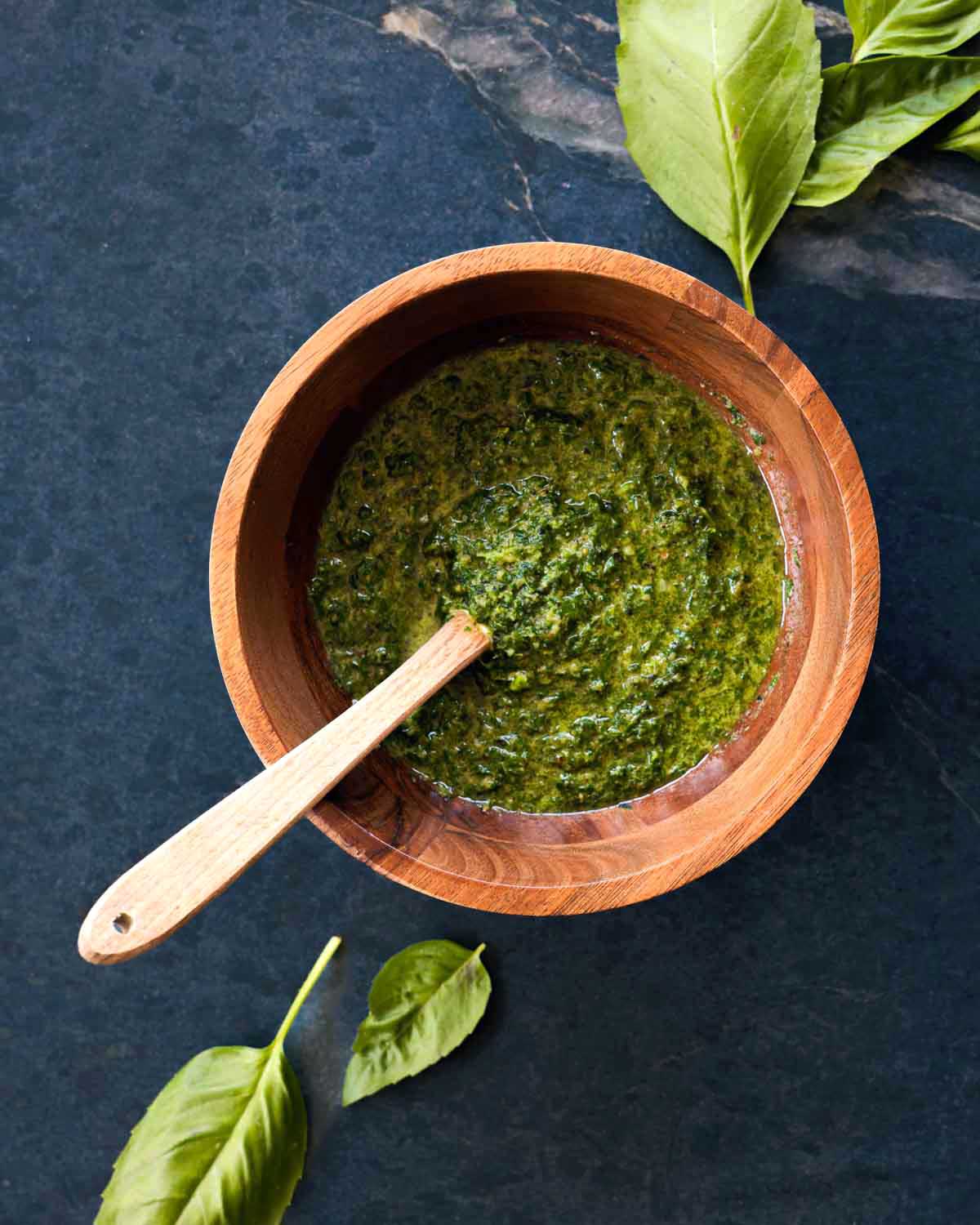
Basil is the core ingredient to pesto. We’ve made pesto with small parts parsley and other greens, but basil always works and tastes the best. We always grow an abundance of basil here on the farm so we usually just stick with what we have.
One of our family favorite meals is Lemon Chicken Pasta. The base ingredient for that is preserved lemons. Adding a touch of this basil pesto with walnuts makes this a really unique dish that is quite possibly a taste of heaven on earth 🙂
As I mentioned, we grow our own basil. When it is ready to harvest, it all comes at once! To preserve the harvest, we make large batches of pesto and freeze them in silicone cube trays. This allows us to enjoy pesto year round, in family size quantities or single use “cubes.”
Why This Recipe Works
- Large or Small Batches. Making a large batch or an individual serving takes about the same amount of time. We uysually make large batches and freeze what we don’t use that night.
- Various Substitutable Ingredients. No basil? Use parsley, arugula, spinach, kale, etc. No walnuts? Sub in pecans, pine nuts, or pistachios.
- Quick, “No cook” recipe. Hard to beat how much flavor you get from a ten minute pesto recipe, compared to an hour+ slow cooked tomato based marinara sauce(don’t get me wrong, I love a good marinara)!
Ingredients


Walnuts: Roast for a few minutes on medium heat to bring out the flavor
Garlic: Roast like the walnuts but to bring down the flavor, not enhance it: roasting garlic mellows the often pungent, spicy flavor of garlic, but enhances the buttery, carmelized flavors you want from garlic.
Oil – Olive oil, like the Italians that invented pesto would have used.
Basil – Fresh is best, but if you don’t have access to fresh, make friends with a neighbor who has a garden and probably planted way too much basil 🙂
Parmesan Cheese – We often add this at mealtime, not directly into the basil. Increases saltiness, nutty notes, and a good exquisite cheese flavor. Add to the recipe now or later directly on your pasta, your choice.
How to Make Basil Pesto with Walnuts

STEP 1: Toast the garlic in a small skillet over medium heat, stir occasionally, until softened and browned a little. Remove the garlic from the pan and set aside.

STEP 2: While the garlic cools, toast nuts in the same skillet over medium heat, stirring often, until fragrant. Remove from the skillet and let garlic and nuts cool to room temperature.

STEP 3: Add the toasted walnuts and roasted garlic to a food processor and mince until finely chopped.

STEP 4: Add salt, oil, parmesan (if using), and basil to the food processor. Process until smooth, about one minute. Add more oil if needed.
Frequently Asked Questions
Pine nuts are the most common nut for pesto, but walnuts, pecans, pistachios, almonds, cashews, and other nuts can easily be used each with their own flavor profile. For all these nuts use the same 1:1 ratio to pine nuts for the pesto recipe.
YES! Pesto can easily be frozen and used later. We tend to freeze in silicon cube trays, and simply pop out the number we need depending on how many we are feeding. Thaw at room temperature for an hour or two.
Basil, the main ingredient in pesto, has an enzyme that oxidizes when it is chopped, bruised, or cut up. Blanching stops this enzyme from activating. Add basil leaves to boiling water for 15 seconds, then immediately put in ice water. You’ll be surprised how green your pesto stays after this one simple step!

Tips & Tricks
- Make a lot, and freeze the rest for later Portion out the pesto into small sizes by using a silicone tray or similar. The one I use holds about a tablespoon of pesto per cube, or the equivalent of a small serving of a pesto pasta dish.
- Pesto is so versatile, don’t be afraid to try different ingredients Most nuts will work for pesto. If you don’t have basil, try parsley, kale, spinach, mint, arugula, watercress to name a few. We’ve even tried garlic scape pesto. It was unique, but still really good. Here’s my guide on how to plant garlic, along with how to harvest, cure, and store garlic. We use garlic in so many dishes here.
- For the ultimate dish, make your own pasta with this Philips Pasta maker. A top ten appliance at our house for sure!
- For greener pesto, blanch the basil before adding it in the food processor. This locks in the enzymes that will otherwise oxidize and turn the basil dark brown. To do this put the basil in boiling water for 20 seconds then put immediately in a bowl of ice water.


How to Use basil Pesto with walnuts other than with pasta
Basil pesto with walnuts can be used lots of different ways. Here are a few we often use, plus some others I have heard about:
- Sandwich Spreads – We use pesto, especially our garlic scape pesto whenever we make paninis. It’s a great flavor, and makes any sandwich instantly “italian”.
- Pizza sauce – Try pesto as a base to a pizza instead of our killer roasted tomato sauce. Spread it on our sourdough pizza dough, and top with some pecorino romano and some fresh cherry tomatoes, you have a pizza your friends will be clamoring over.
- Roasted veggie topper – We often add pesto to our roasted veggies if we want something other than salt and pepper as the seasoning.
Once you start experimenting, you’ll be amazed at how versatile pesto can be, and how tasty it is on so many different dishes. Don’t take my word for it, print this recipe, make some pesto, and start enjoying some fresh, homemade flavor that ‘s good on nearly anything.
If you made this Basil Pesto with Walnuts Recipe or any other recipe on my blog please leave a 🌟 star rating and let me know how it went in the comments below. Thanks for visiting!
Basil Pesto with Walnuts
Equipment
Ingredients
- 3 oz basil roughly 3 packed cups worth
- 1/4 cup walnuts
- 3 cloves garlic
- 1/2 cup olive oil
- 1/2 teaspoon salt
- 1/4 cup parmesan cheese optional
Instructions
- Toast the garlic in a small skillet over medium heat, stir occasionally, until softened and browned a little. Remove the garlic from the pan and set aside.
- While the garlic cools, toast nuts in the same skillet over medium heat, stirring often, until fragrant. Remove from the skillet and let garlic and nuts cool to room temperature.
- Add the toasted walnuts and roasted garlic to a food processor and mince until finely chopped.
- Add salt, oil, parmesan (if using), and basil to the food processor. Process until smooth. Add more oil if needed.