
How to grow Sweet Potatoes | Everything You Need to Know
Sweet Potatoes are a rewarding crop to grow in the garden. Each plant can grow an average of 10 pounds of nutritious, filling food while only taking a few square feet of garden space. I highly recommend this crop for both beginners and experienced gardeners alike in growing areas that allow for it.
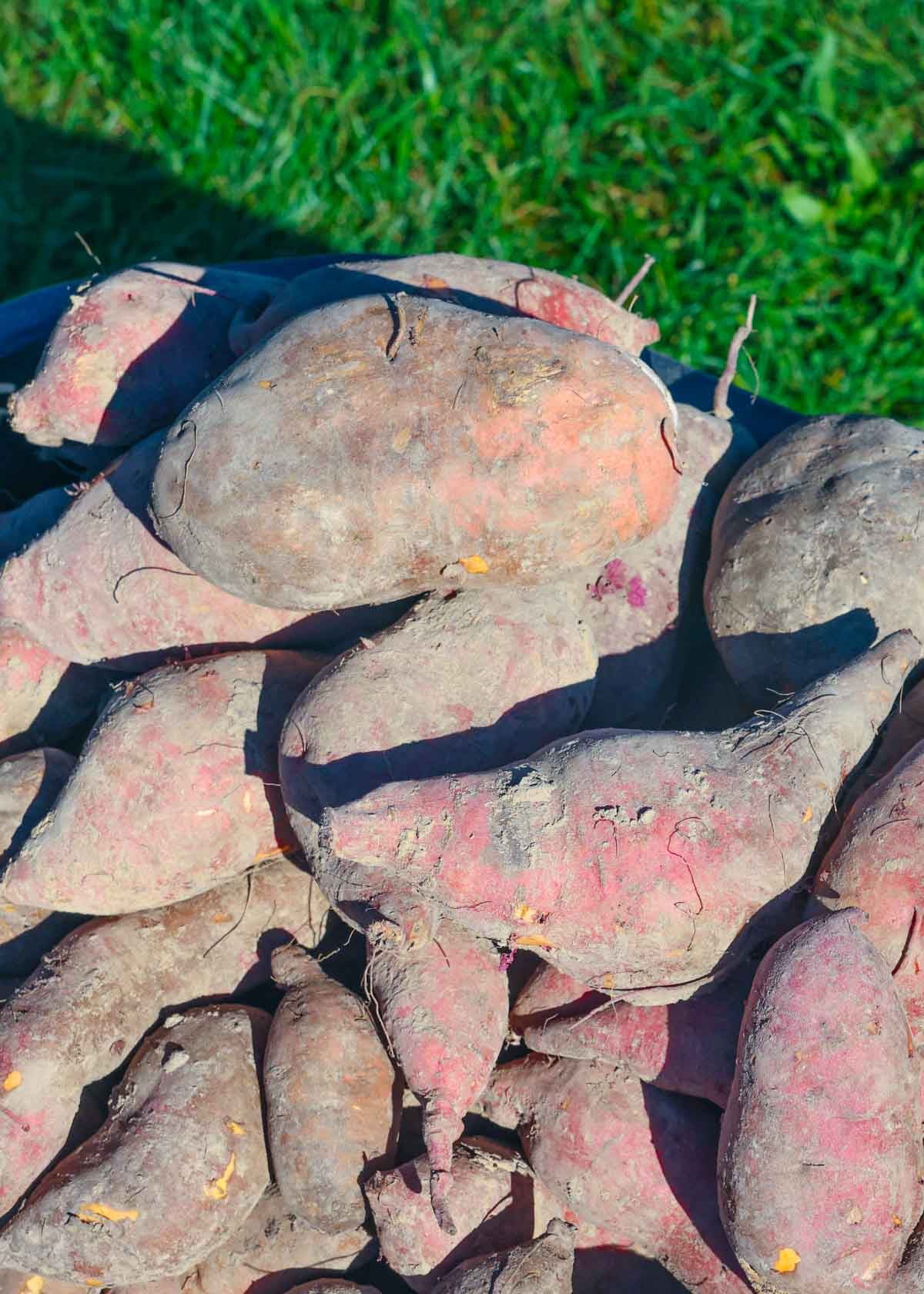
History of the Sweet Potato
The origin of the sweet potato is debated but most believe they began in Polynesia and then made their way over to South America. As such, they are adapted to warm, humid climates.
They are one of the world’s most widely cultivated crops and are in the morning glory family. Since they provide a large amount of calories, they are an important survival garden crop and are grown for food security in many areas of the world.
How to plant Sweet Potatoes from slips
Sweet potatoes are not grown from seeds. They are grown from last year’s potatoes which will sprout green leaves and vines from the tuber, called “slips”.
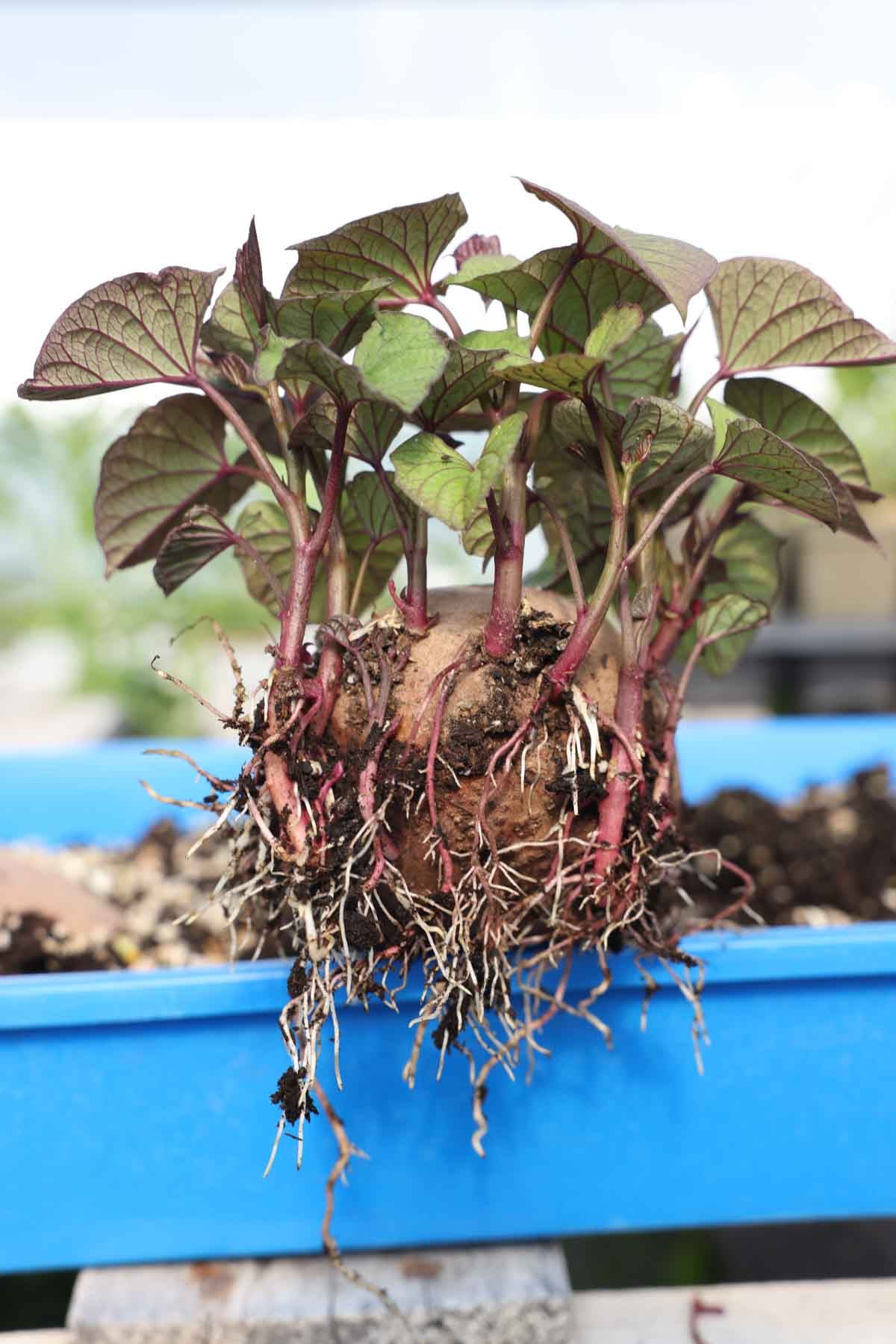
There are two methods of sprouting sweet potatoes, the water method or the soil method. While the water method is more commonly known, the soil method is generally faster and more efficient. It produces plantable slips in about half the time.
Water method
To start sweet potato slips using the water method, suspend a sweet potato over a jar of water using toothpicks and place it in a sunny window.

Once slips are several inches tall and have a few leaves, remove them and root them in moist potting soil before planting.
Soil method (preferred)
To start sweet potato slips using the soil method lay whole sweet potatoes in a tray and cover them with moist seed-starting mix.
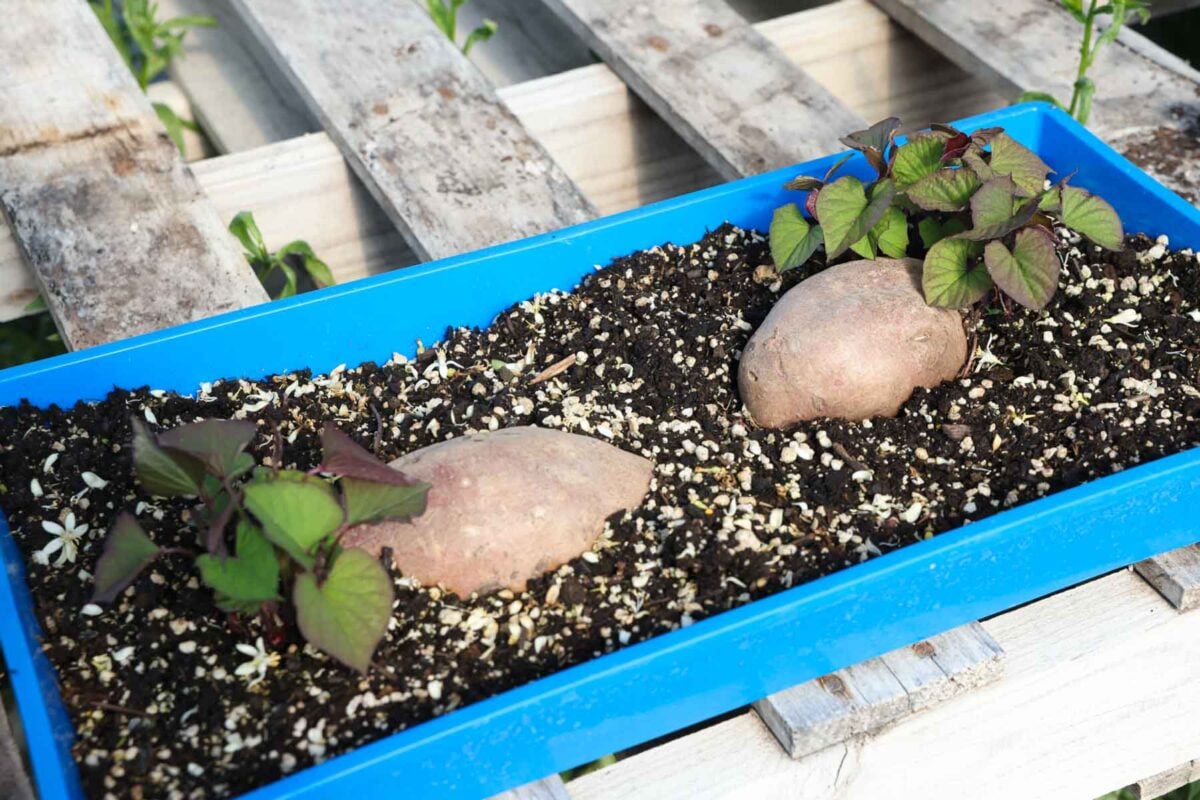
Keep them warm and moist under grow lights, in a greenhouse, or near a sunny window. Slips typically develop in 3–4 weeks and often form roots while still attached, eliminating the extra rooting step.
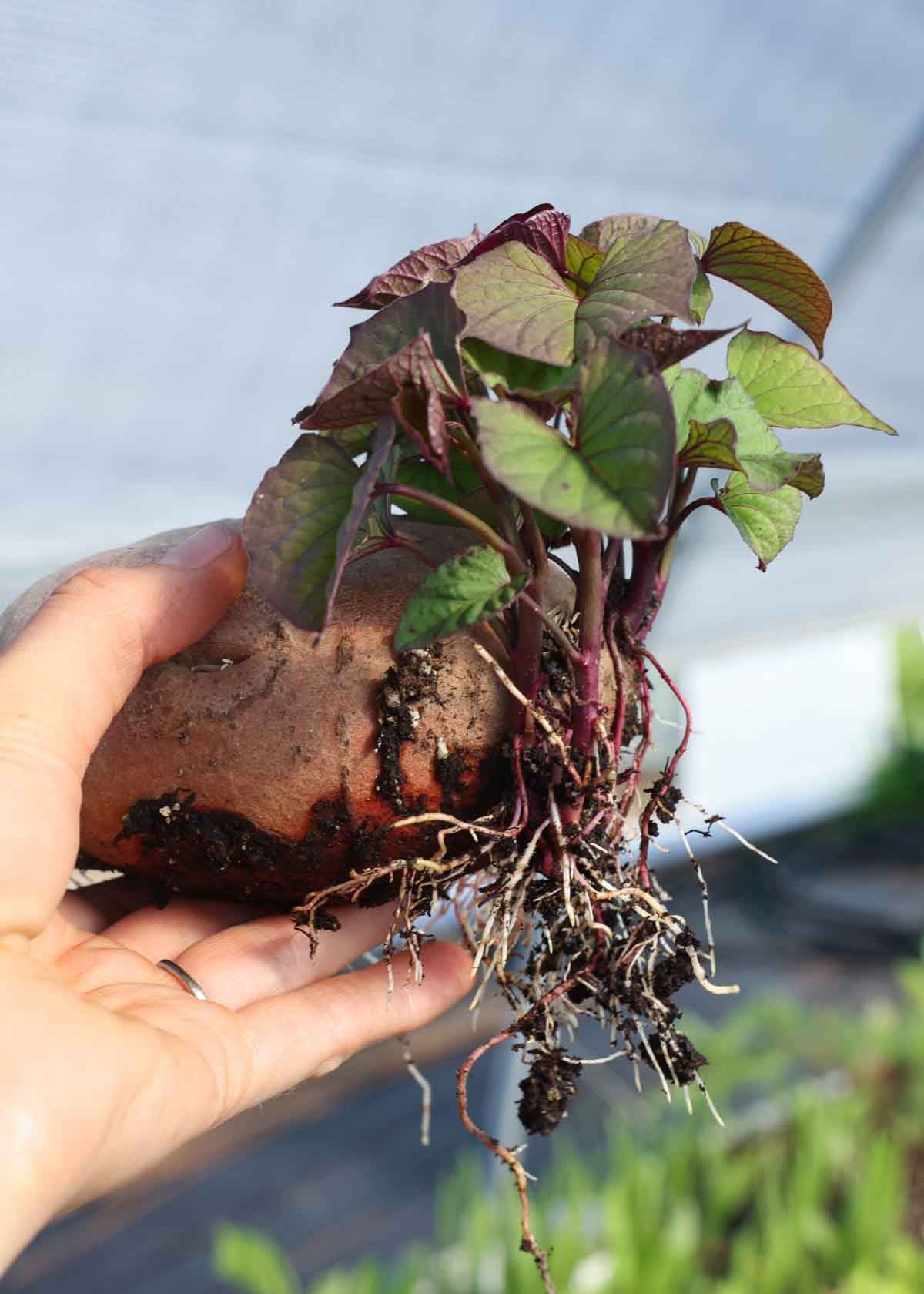
Break off the slips into individual pieces prior to planting (see below). I usually break them off then stick them back into a pot or the tray to grow until I have enough to plant.
Also make sure to harden off the slips by gradually exposing them to sun and wind over the course of a week.
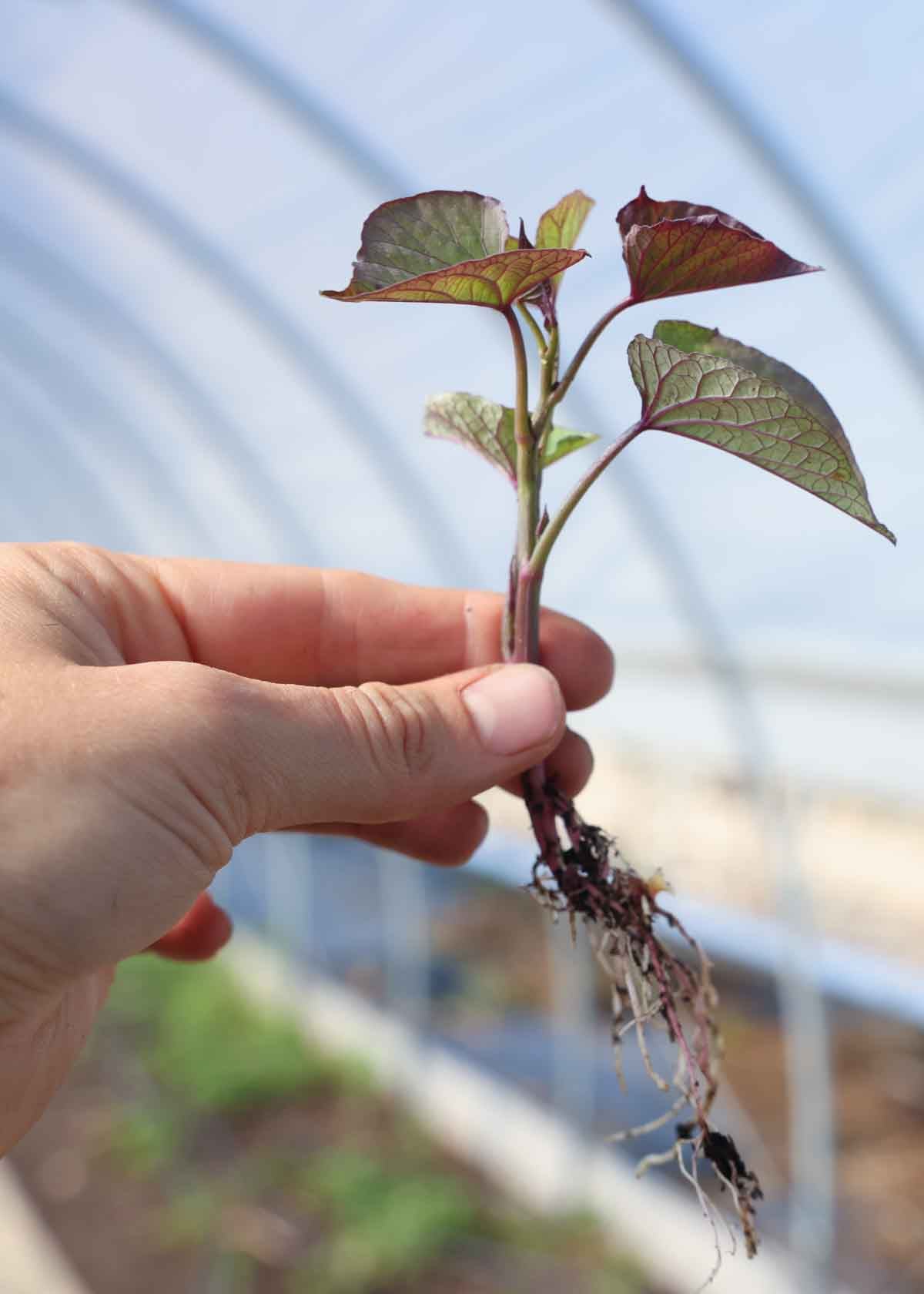
Here’s where you can find my full explanation of how to grow sweet potato slips with pictures.
Choosing The Best Varieties Sweet Potatoes to Plant
There are many sweet potato varieties that include all different colors and textures to choose from!
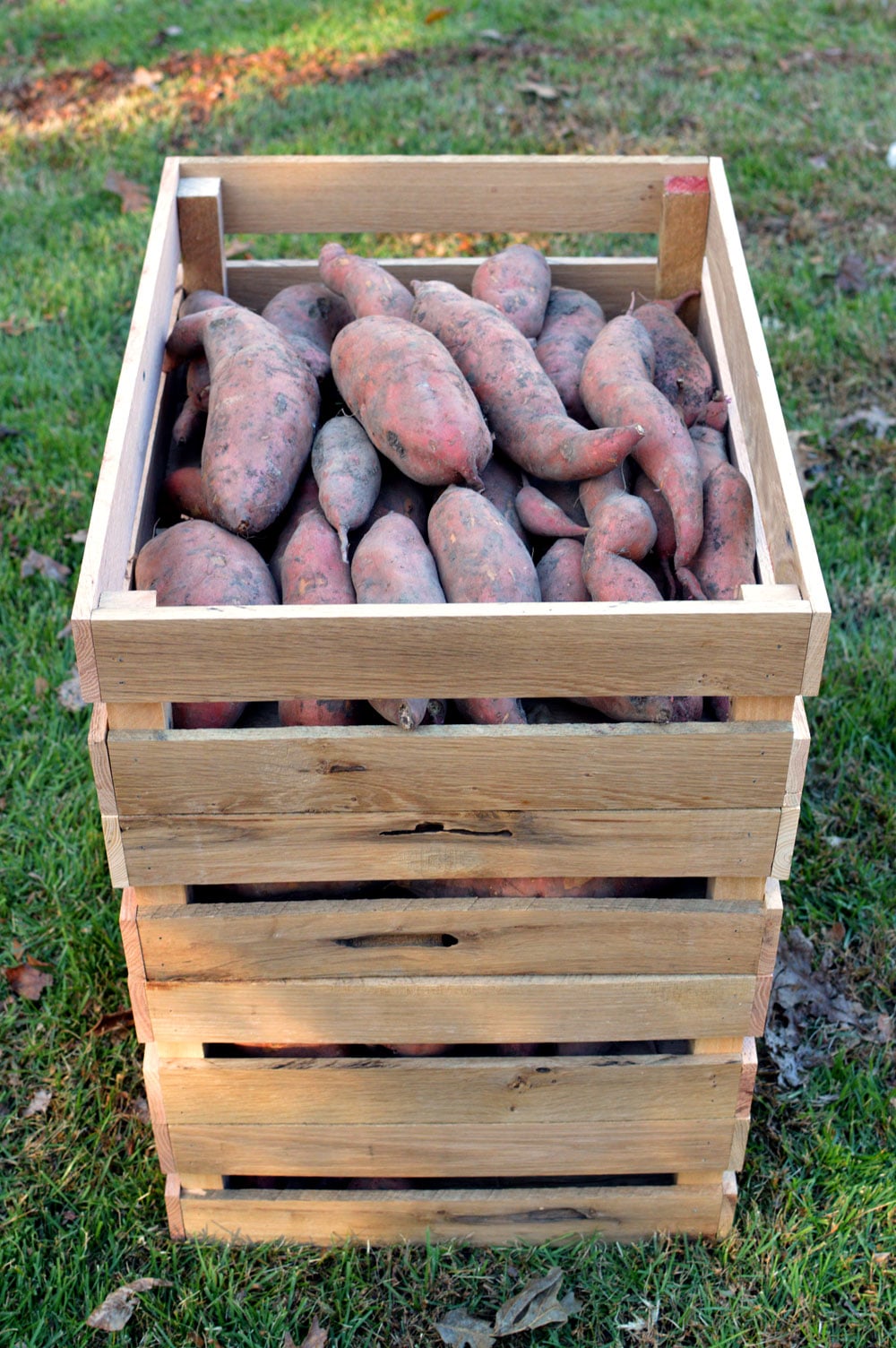
Here are a few of our favorites:
Beauregard – Beauregard is very reliable, hardy, and can grow massive sweet potatoes if you let it. The size of this sweet potato varies, growing both large and small sweet potatoes in the same plant. Color: Orange
Purple Majesty– This sweet potato is a show stopper of beautiful dark purple roots that hold their color even when cooked. In my experience, they don’t yield as much as Beauregard but they have tubers are uniform in size. Color: Dark Purple
White Bonita– It has a sweet taste and high dry matter content. As such, it’s especially well suited for baking and desserts. The roots are generally more slender and uniform than those of many traditional sweet potato varieties. Color: White
Covington– If you’re looking for a more evenly sized sweet potato with almost the same vigor as beauregard, this is the sweet potato for you. It also holds up well to harvesting in wet conditions and is disease resistant. Color: Orange
If you want to read more, here’s detailed info on sweet potato types from NC State University.

Tips to Grow Sweet Potatoes in a Cold Climate
- Plant sweet potatoes in a greenhouse. This is the easiest way to mimic a warmer growing zone. If you want to keep it even warmer add a row cover over the sweet potatoes.
- No greenhouse? Plant those sweet potatoes under a low tunnel covered with row cover to keep them warm at night. This is very important for sweet potatoes.
- Grow a fast maturing sweet potato variety like Beauregard or Georgia Jets.
- Plant them in raised garden beds where the soil warms faster and stays warmer all summer.
- Consider adding some kind of black covering for the soil to keep it warm and to prevent weeds. I recommend this quick plant fabric.
Sweet potatoes are not well adapted to areas with short growing seasons and cooler summers. However, that doesn’t mean you can’t try. Even though I live in the southern US now, I have experience growing in a cold climate prior to living here.
The Best Time to Plant Sweet Potatoes
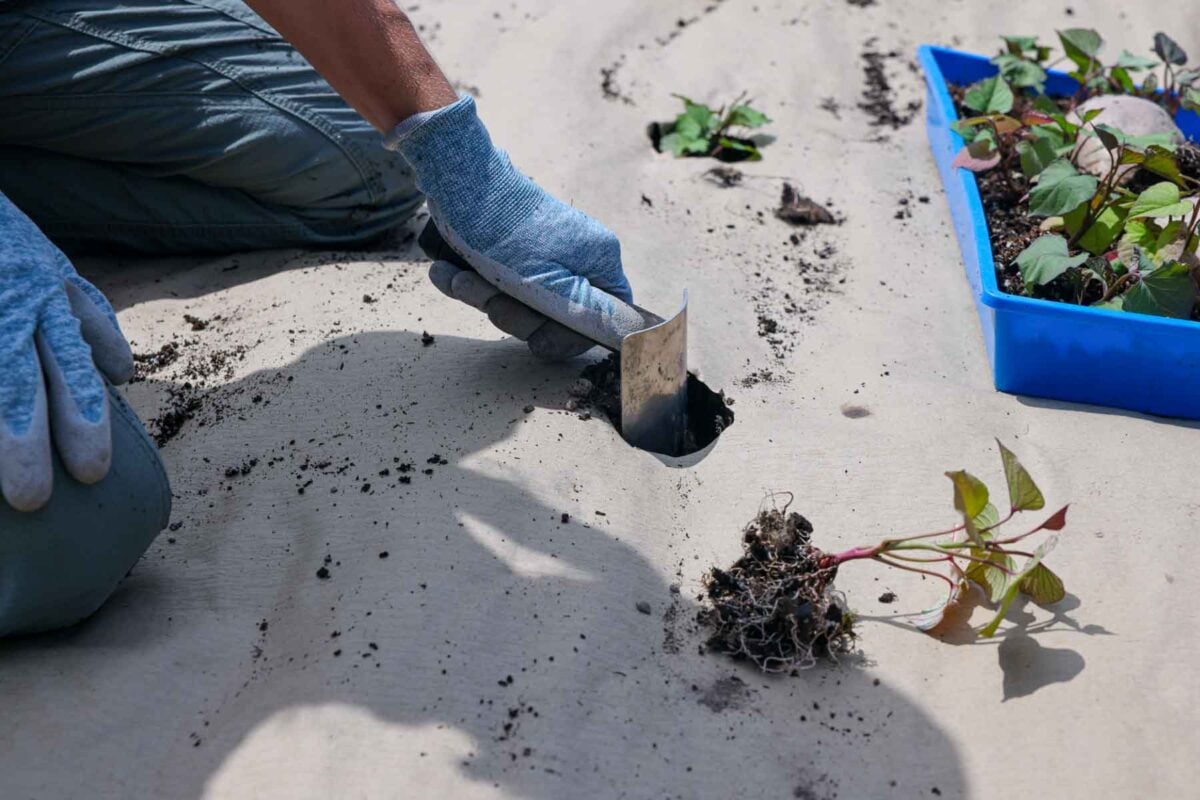
The best time to plant sweet potatoes is when the soil temperature consistently stays above 65ºF (18ºC). This means you check with a thermometer pushed in the ground four inches deep. Test at about 7am before the soil warms from the sun.
If you don’t have a way to test soil temperature, plant sweet potatoes at least two weeks past your average last frost.
Sweet potatoes don’t like to be hurried and hate cold temperatures. The plants will be damaged if the soil temperature drops below 55ºF (13ºC).
Soil Preparation for Sweet Potatoes
A soil test will help you determine how much fertilizer you need for your sweet potatoes. Here is my favorite soil test kit.

You’ll want to make sure you have adequate levels of phosphorus, potassium, and plenty of minerals for sweet potatoes to grow.
A small amount of Nitrogen is needed. I usually only use one inch of compost to the top of my soil to meet this need.
If you want an idea of a general organic fertilizer that works well for sweet potatoes try this 2-6-5 blend.
How to Plant Sweet Potatoes (Spacing and Depth)
Sweet potatoes like to be planted with 12-18 inch spacing between plants and about 4 feet between rows.
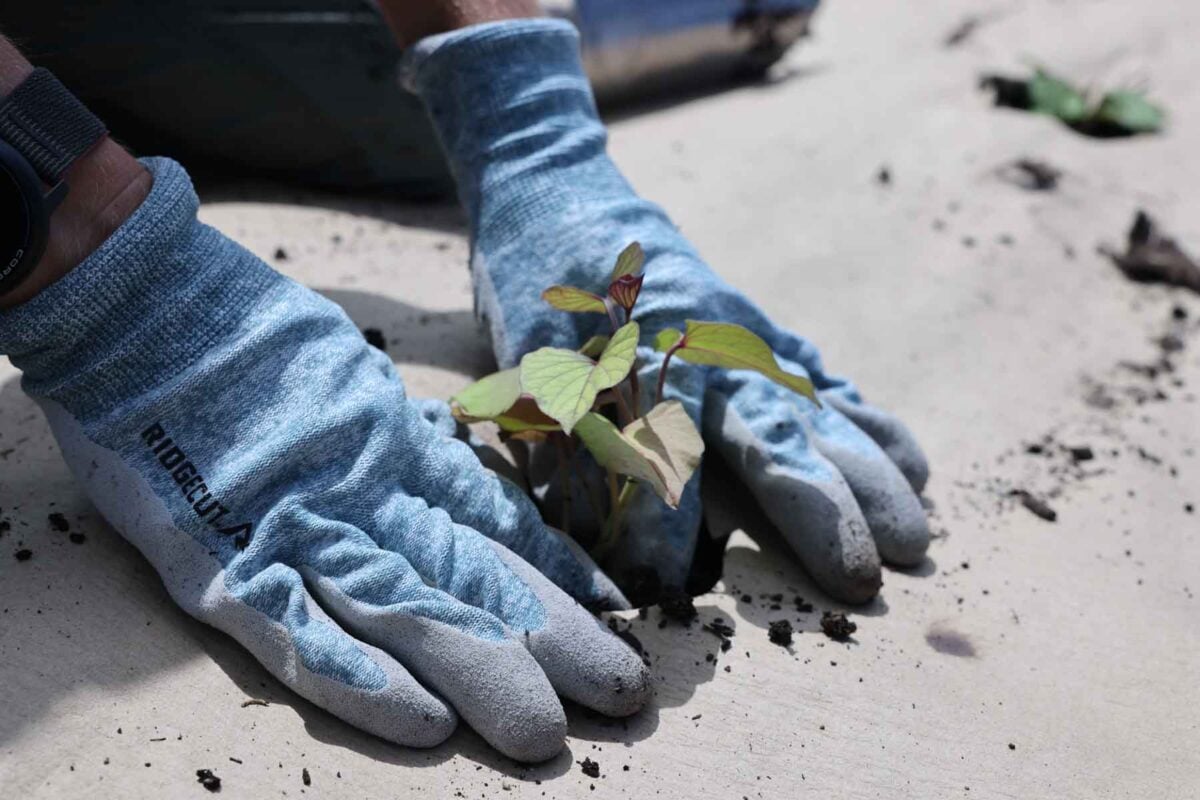
Plant your slips up to the top of the roots, allowing a portion of the stem and leaves to stay above ground.
Watering Your Sweet Potatoes
Applying uniform moisture is important for sweet potatoes. It helps them resist cracking and it increases the size.
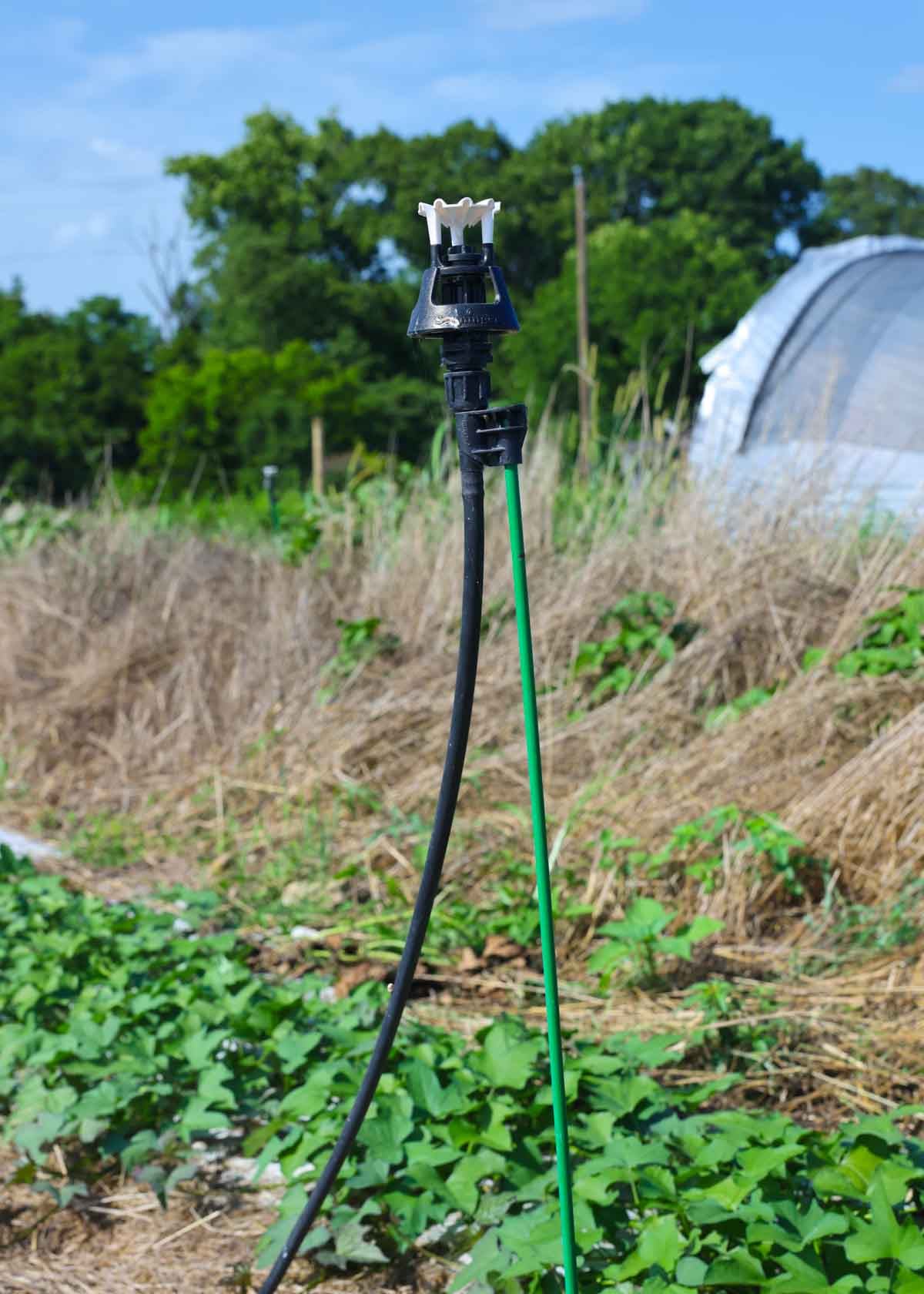
Aim for watering around 1.5 inches every week in the heat of the summer. If you are new to irrigation and aren’t sure what that actually means for you personally, you can figure out exactly how many gallons of water you need or how long to run your hose via this article on irrigation amounts.
Here is an example of applying 1.5 inches of water to sweet potato irrigation area of 1000 square feet:
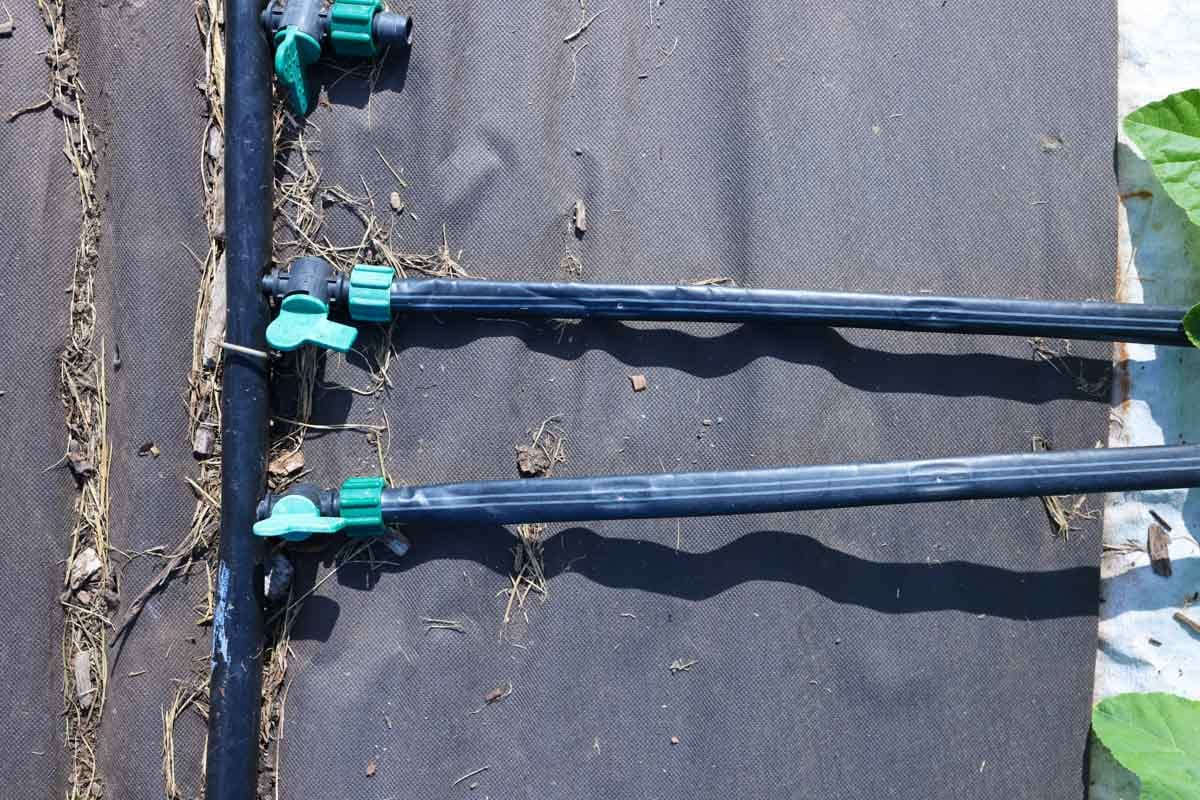
Our system is drip irrigation with a limiter that allows 7 gallons per minute. So it needs to run 2 hours and 13 minutes total per week.
Because drip irrigation applies water slowly and due to hot summers we split that time into multiple watering sessions rather than running it all at once.
We set the timer to every other day, 45 minutes per watering session.
This provides nearly the equivalent of the 1.5 inches of water per week needed for sweet potatoes.
How to Grow Sweet Potatoes in Containers
- Start with at least a 20 gallon container for planting sweet potatoes. Sweet potatoes like a lot of room and need space to grow.
- Plant 2-3 slips per 20 gallon container. It’s possible to plant more but the sweet potatoes will be smaller in size if you crowd them.
- Fill the container ⅔ of the way with a high quality potting soil (best price is linked).
Common Sweet Potatoes Pests
Sweet potatoes and their greens are a tasty treat for critters but thankfully, they don’t have too much trouble with insects.
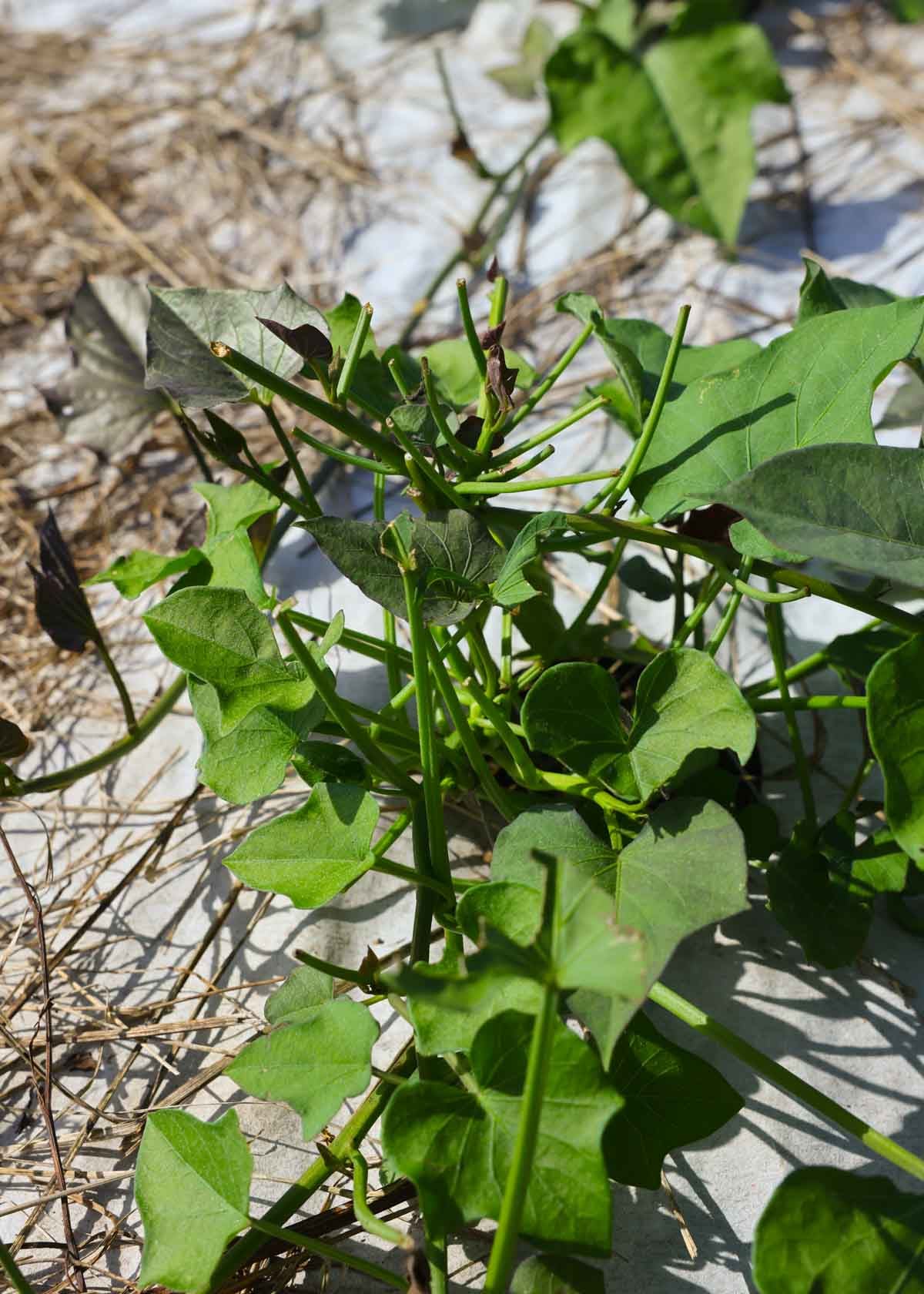
Wireworms
Wireworms are the larvae of click beetles and will bore into the potatoes causing tunnels through your sweet potatoes. They are thin, hardbodied and normally a burnt orange color. They are usually about a half inch to one inch long.
Prevention is the key to keep wireworm damage from zero to minimal. Natural methods of prevention are crop rotation, running chickens though garden areas to eat the larvae (see note below), and hand picking any you see out prior to planting.
Note: The caveat to letting chickens roam the garden is to be smart about it. Chickens will cause damage to garden crops including sweet potatoes. I usually let my barred plymouth rock chickens roam in late fall or early spring when not much is growing.
Rodents (moles, voles, mice)
Rodents love sweet potatoes so if you have a known problem with them use prevention methods.
Prevention methods include setting traps and planting sweet potatoes in open areas. Rodents like to hide from birds of prey so the more out in the open the sweet potatoes are, the less likely they are to hang out in that area. Try not to overcrowd them.
Deer and rabbits
Sweet potato leaves are an absolute favorite of deer. I had sweet potato leaves spreading outside my garden fence and the deer at every single one!
We also occasionally have rabbits enjoy the leaves. Thankfully the rabbits don’t usually eat all the leaves and the plant will recover just fine.
The only sure way to prevent deer and rabbits is a physical barrier. Here’s my best advice on how to create an animal proof garden fence.
Pre-Harvest Tips
An important set commercial growers do prior to harvesting sweet potatoes is to remove the vines and foliage at least seven days before harvest time. This allows the skin to toughen and it reduces damage at harvest time.
Another tip is to harvest when the soil moisture is correct. If the soil is too dry, that will increase the possibility of damage to sweet potato skins. The correct soil moisture is slightly moist. The soil shouldn’t be so wet it clumps up at harvest.
Harvesting Sweet Potatoes
Here are some ways to figure out when sweet potatoes are ready for harvest:
- count out days to maturity
- wait until they flower (not all varieties flower so this isn’t always reliable)
- look for yellowing at the stem
- Check for bulging of the soil
- Do a test harvest.
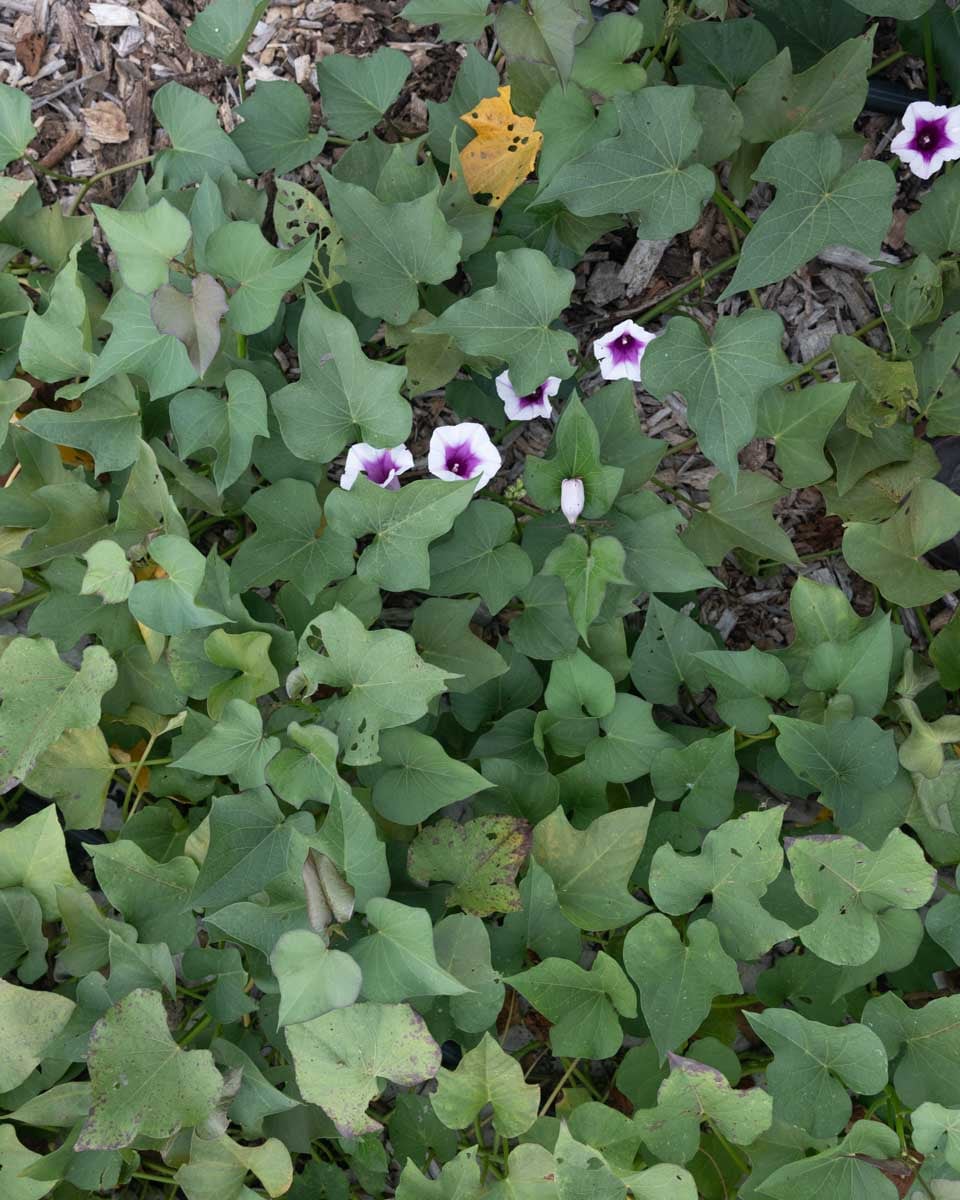
In depth information on each of these can be found in my article, When to Harvest Sweet Potatoes.
Another important thing to know for sweet potato harvest is timing matters. Harvest time for sweet potatoes happens toward the autumn for most growers. Therefore, it’s important to be aware that sweet potato tubers should not be left in cold temperatures.
Believe it or not, chilling injury to sweet potatoes even if a frost hasn’t occurred. They can take on damage with soil temperatures lower than 55ºF (13ºC).
Sweet Potatoes Storage at Home
Curing sweet potatoes immediately after harvest helps reduce scarring and sunken spots in the sweet potatoes.
The ideal conditions for curing sweet potatoes are 85ºF (29ºC) with 85-90% relative humidity for 5 to 7 days. Good airflow is important for the sweet potatoes to cure well.
For southern home growers, these conditions can be replicated in a covered area outdoors.

For example, we are usually picking sweet potatoes about mid August and during that time we are still experiencing 90ºF (32ºC) temperatures. I put them on a screen in our garage, turn a fan on, and let them sit for 5 days.
After that any wounds have healed and they are moved indoors for long term storage.
If curing when outdoor temperatures are lower than 85 or 90ºF, bring the sweet potatoes indoors and place them next to a warm heater or a wood stove where temperatures are 85ºF (29ºC).
Properly cured sweet potatoes will store for at least 6 months. Ideal conditions for storage are 60ºF (15ºC) with 80-90% relative humidity.
For some people the conditions are easily recreated in a cool basement over the winter. However, even if you don’t have ideal conditions don’t worry too much about it. Sweet potatoes actually store fairly well at room temperature.
We don’t have a basement so they are stored in our pantry which is 68ºF with 45% humidity and they keep all winter with very little sprouting.
One of the downsides of low humidity is that the sweet potatoes will lose moisture in storage.
Ways to Preserve Sweet Potatoes & Recipes
Sweet potatoes don’t require preservation because they store well at less than ideal conditions. However, if you have a bumper crop or just want to ensure your harvest will last a long time they can be preserved.
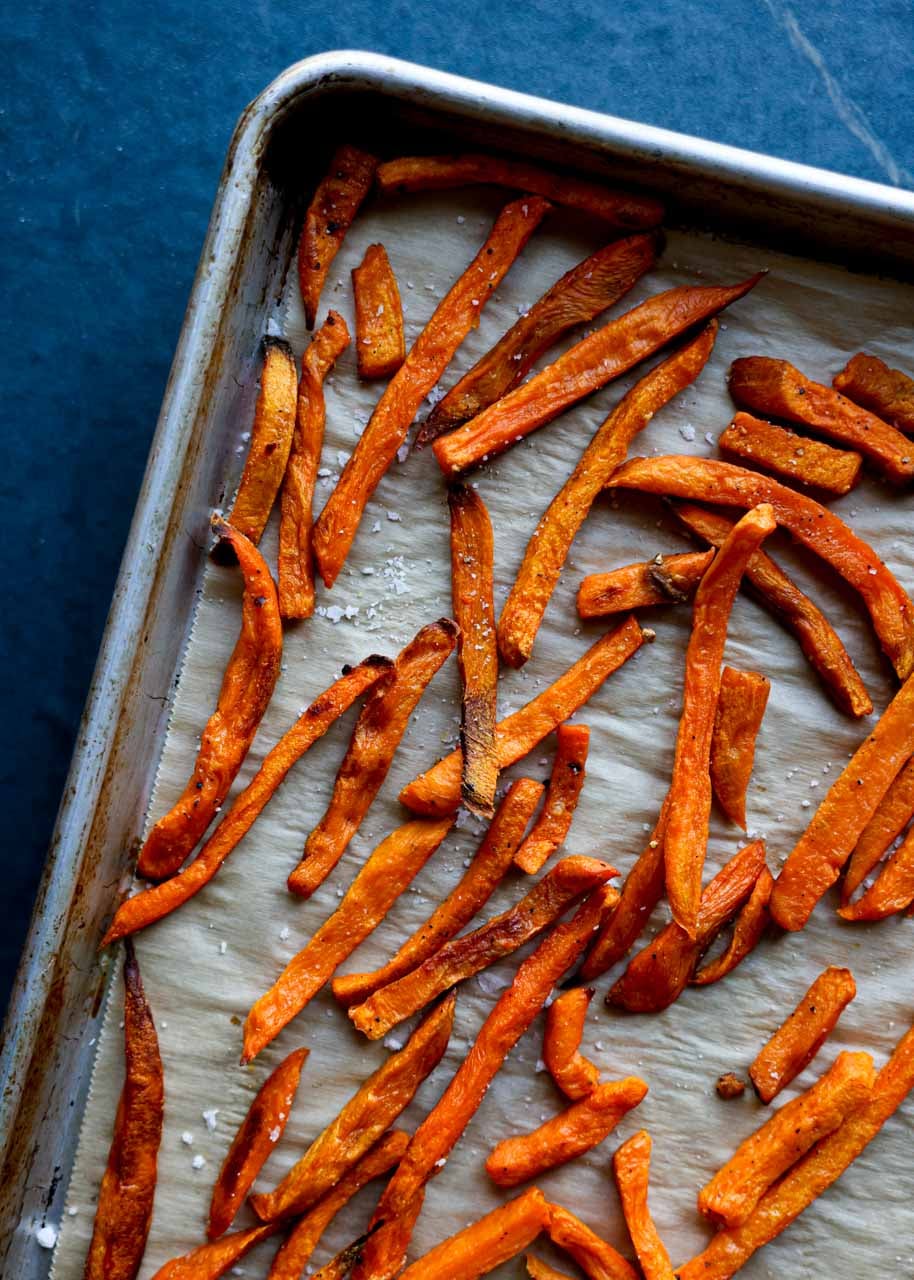
Our favorite way to preserve them is by making sweet potato fries for the freezer. These last for about a year when vacuum sealed and make it super easy and convenient for eating in a hurry.
Another new way that we have preserved sweet potatoes is by freeze drying them into chips. Freeze Dried Sweet Potato Chips make a great snack and when properly stored they can last for many years.


